Wall Insulation in Orange, CA
Energy-Saving Wall Insulation for Orange, CA Homes — Licensed & Insured
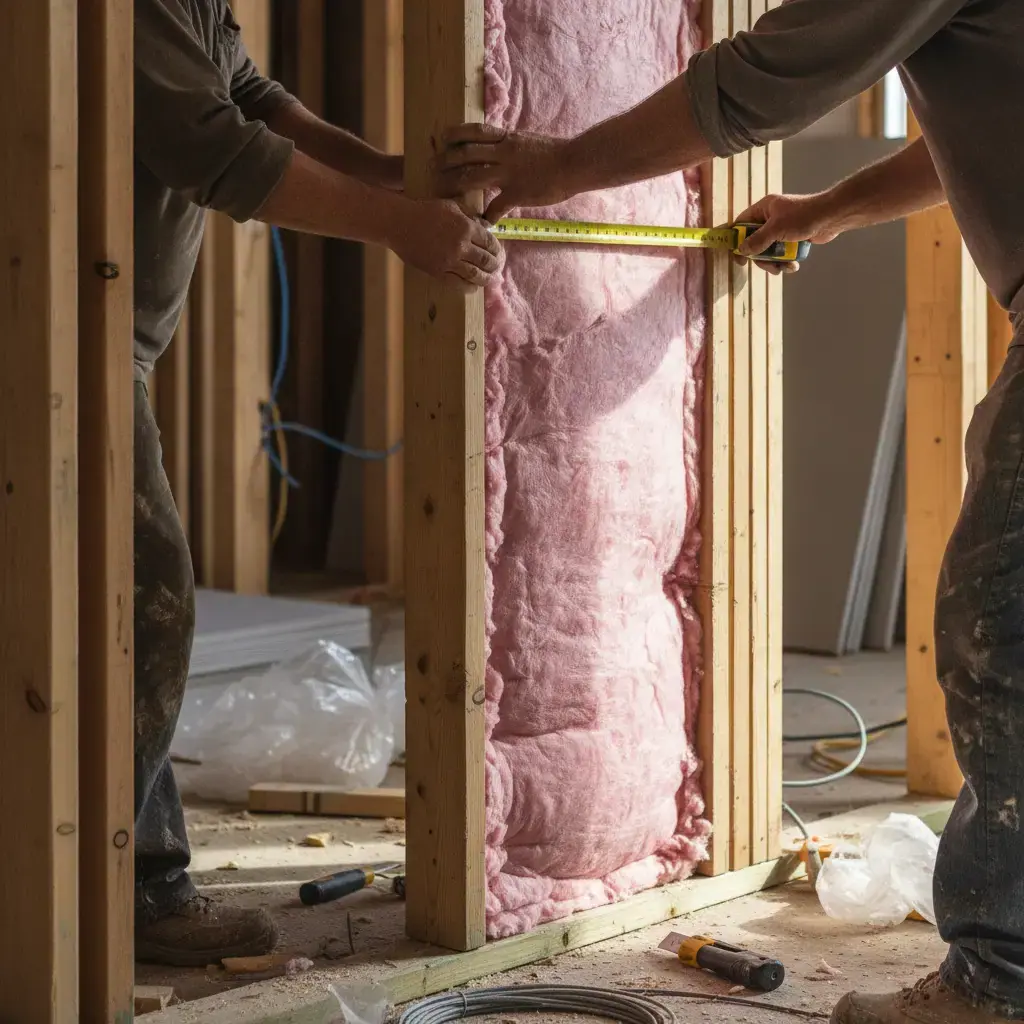
Wall insulation is the process of installing thermal and acoustic barrier materials inside the walls of a home or commercial building to regulate indoor temperature, reduce energy consumption, and improve overall comfort. For homeowners and business owners throughout Orange, CA, proper wall insulation is not a luxury — it is a necessity shaped by the region’s warm Mediterranean climate, seasonal heat spikes, and aging housing stock.
Orange experiences summer temperatures that regularly climb above 95°F, placing continuous demand on HVAC systems battling under-insulated walls. Whether you live in a mid-century ranch home near Old Towne or a newer construction near the Chapman University district, wall insulation performance directly determines your monthly utility bills and indoor air quality.
Read moreShow less
At Home Comfort Insulation, our team specializes in professional wall insulation installation, removal, and replacement throughout Orange, CA. We assess your specific wall cavity types, existing insulation conditions, and local climate demands to recommend the most effective solution. Call us today at (714) 909-2175 for a free on-site evaluation.
Understanding Wall Insulation in Orange, CA
Wall insulation refers to any thermally resistant material installed within interior or exterior wall assemblies to slow the transfer of heat between conditioned indoor spaces and the outside environment. The concept of building insulation dates back centuries, but modern residential wall insulation became standardized in the United States following the energy crisis of the 1970s, when building codes began mandating minimum R-value requirements for new construction.
R-value is the measurement used to define an insulation material’s resistance to heat flow. A higher R-value means greater thermal resistance. For wall assemblies in California Climate Zone 8 — which covers Orange and much of Orange County — the California Energy Commission recommends wall insulation achieving at minimum R-13 for 2×4 framing and R-20 or higher for 2×6 framing. Many older homes in Orange fall significantly short of these benchmarks.
Read moreShow less
Orange’s housing stock is particularly diverse in age and construction type. The city contains thousands of homes built during the postwar boom of the 1950s and 1960s, many of which were constructed with little to no wall insulation by today’s standards. The Old Towne Orange Historic District, listed on the National Register of Historic Places, contains craftsman bungalows and Victorian-era structures from the early 1900s where original wall cavities were filled with little more than wood lath and horsehair plaster.
Beyond these historic homes, Orange also features large tracts of tract housing developed through the 1970s and 1980s in neighborhoods such as Santiago Hills and Serrano Heights, as well as newer mixed-use and residential development around the Village of Orange Town Center. Each building era and type presents unique insulation challenges: older homes often have no insulation or deteriorated batt insulation, while homes from the 1980s and 1990s may have insulation that has settled, become moisture-damaged, or degraded in performance over decades of Orange County’s dry heat and occasional winter moisture intrusion.
Understanding what type of wall system your home has — wood-framed stud walls, masonry block walls, or steel-framed commercial construction — is the first step toward determining which insulation method will deliver the greatest return on investment for your Orange property. Learn more about insulation types we install
Why Wall Insulation Is Needed in Orange, CA
Orange County’s Heat Events and Their Impact on Walls
Orange sits within one of Southern California’s most heat-affected inland corridors. While coastal cities like Newport Beach enjoy marine layer cooling, Orange is located approximately 10 miles inland, where temperatures are significantly hotter for longer periods each year. During the September 2022 California heat dome event — one of the most extreme on record — temperatures in Orange reached 108°F. In October 2017, the region similarly endured multi-day temperatures above 100°F during the Santa Ana wind conditions associated with the Canyon 2 Fire that devastated nearby Anaheim Hills just 3 miles northeast of central Orange.
During these extreme heat events, under-insulated walls allow radiant heat to penetrate interior living spaces rapidly. A home with walls rated at R-0 (no insulation) can see interior wall surface temperatures rise to 110–115°F during peak afternoon sun exposure on west- and south-facing walls, forcing HVAC systems to work 40–60% harder to maintain a setpoint of 75°F.
Santa Ana Wind Conditions and Air Infiltration
Orange County experiences Santa Ana wind events primarily from September through March, during which low-humidity, high-velocity winds exceed 50 mph and dramatically alter the thermal dynamics of wall assemblies. These dry desert winds — arriving from the northeast and channeling through passes like the Brea Canyon corridor — create negative pressure on the windward side of homes, pulling unconditioned air through wall gaps, electrical outlets, and unsealed cavities. Homes in the Santiago Hills and Nohl Ranch Road corridor are particularly susceptible to this infiltration due to their hillside exposures and orientation.
Aging Housing Stock and Insulation Degradation
The City of Orange contains over 43,000 occupied housing units, and a substantial portion were built before 1980. The Old Towne Orange neighborhood — bounded roughly by Chapman Avenue, Glassell Street, Maple Avenue, and Shaffer Street — contains hundreds of homes built between 1905 and 1940 with zero insulation in exterior wall cavities. In the surrounding neighborhoods of Eichler tracts near Prospect Street and West Chapman Avenue, radiant barrier properties of original construction have long since degraded.
California Title 24 Energy Compliance
California’s Title 24 Building Energy Efficiency Standards have grown increasingly stringent with each three-year update cycle. Homeowners in Orange undertaking permitted additions, ADU construction, or significant renovations are now required to bring wall insulation into compliance with current standards. Failure to meet these requirements can result in permit holds and failed inspections from the City of Orange Building Division, located at 300 E. Chapman Avenue.
Noise Pollution from Local Traffic Corridors
Orange’s proximity to the SR-55 (Costa Mesa Freeway), SR-57 (Orange Freeway), and Interstate 5 creates significant road noise concerns for homes within a half-mile of these corridors. Neighborhoods along Katella Avenue, Lincoln Avenue, and Chapman Avenue experience daily traffic noise averaging 65–75 decibels — well above the 45-decibel interior threshold recommended for restful living environments. Dense-pack and spray foam wall insulation products provide 8–12 STC (Sound Transmission Class) points of acoustic improvement over uninsulated walls, meaningfully reducing interior noise levels. Explore our spray foam insulation services
Free, no-obligation estimates
Talk to Home Comfort Insulation
Tell us what you need and we’ll take it from there.
Signs You Need Wall Insulation in Orange, CA
Energy and Utility Indicators
- Monthly electricity bills exceeding $180–$250 during June through September in a typical 1,500–2,000 sq. ft. Orange home
- HVAC system running continuously without reaching thermostat setpoint during afternoon hours
- Noticeable temperature differences of 5°F or more between rooms on the same floor
Physical and Structural Symptoms
- Walls that feel warm to the touch on interior surfaces during summer afternoons — particularly on west-facing exterior walls after 2:00 PM
- Drafts felt near electrical outlets, light switches, or baseboards on exterior walls during Santa Ana wind events
- Visible gaps, cracks, or settling around window frames and door jambs on exterior walls
- Moisture staining or soft drywall texture on interior wall surfaces, which may indicate failed or absent vapor management
Comfort and Noise Concerns
- Road noise from SR-55, SR-57, or surface streets clearly audible inside rooms with exterior walls
- Difficulty maintaining comfortable temperatures in bedrooms with west-facing walls
Urgency Indicators
- Your home was built before 1980 and has never had wall insulation addressed
- You are planning a kitchen or bathroom remodel that will open exterior walls — this is the ideal time to add insulation
- A home energy audit has identified wall insulation as a priority deficiency
Our process
Our Wall Insulation Process in Orange, CA
Home Comfort Insulation follows a structured, location-informed process to ensure every wall insulation project in Orange is completed correctly, efficiently, and in compliance with California energy codes.
- 01
Free On-Site Assessment (1–2 Hours)
Our technician visits your Orange property to evaluate wall assembly types, existing insulation condition (if any), building age, framing dimensions, and any signs of moisture or pest intrusion. We use thermal imaging cameras to detect heat loss patterns acros
- 02
California Title 24 Review and Permit Coordination (1–3 Business Days)
For qualifying projects — including ADU builds, room additions, or full exterior wall retrofits — we coordinate with the City of Orange Building Division to confirm permit requirements. Orange’s permitting portal has moved substantially online, and we manage t
- 03
Removal of Old or Damaged Insulation (Half-Day to Full Day)
Where existing insulation has degraded, is contaminated with moisture, or fails to meet current R-value targets, we perform full removal prior to new installation. Learn about our insulation removal services This is particularly common in pre-1980 Orange homes
- 04
Air Sealing and Cavity Preparation (2–4 Hours)
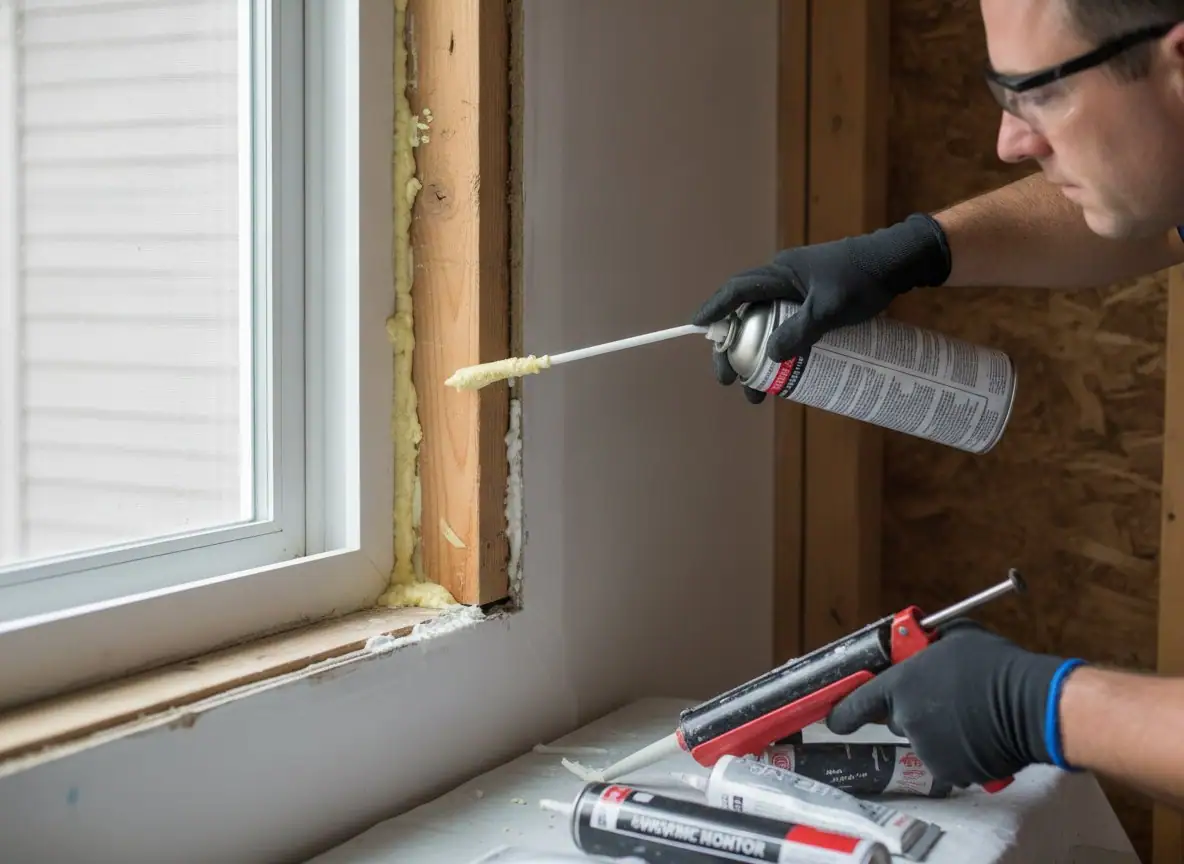
Before installing new insulation, we seal all penetrations, gaps at top and bottom plates, and electrical box openings using low-expansion spray foam sealant. This step is critical for homes near Orange’s major traffic corridors, where air infiltration also ca
- 05
Insulation Installation (Half-Day to Full Day)
Depending on the selected method — blown-in, spray foam, or batt — our certified crew installs insulation to achieve the targeted R-value for California Climate Zone 8. We verify coverage depth and density at multiple test points throughout the installation.
- 06
Quality Control Inspection (1–2 Hours)
Post-installation, we conduct a thermal imaging scan and visual inspection to confirm uniform coverage with no voids, gaps, or compression errors.
- 07
Cleanup and Final Walkthrough (30–60 Minutes)
We restore any access points used during blown-in applications, remove all materials and equipment, and walk you through the completed work with documentation of R-values achieved. Learn more about blow-in insulation
Wall Insulation Methods We Use in Orange, CA
Blown-In (Dense-Pack) Insulation
Dense-pack blown-in insulation — typically cellulose or fiberglass — is our most frequently used method for retrofit wall insulation in Orange’s existing homes. Small holes (approximately 2 inches in diameter) are drilled into exterior sheathing or interior drywall, and insulation is blown in at high density (3.5 lbs/cubic foot for cellulose) to fill cavities completely without the need for full wall demolition. This method is ideal for Old Towne Orange craftsman homes, mid-century ranch homes near Prospect Street, and any home where preserving existing wall finishes is a priority. Dense-pack cellulose achieves R-3.7 per inch, reaching R-13 in a standard 2×4 stud cavity. Explore blow-in insulation options
Spray Foam Insulation
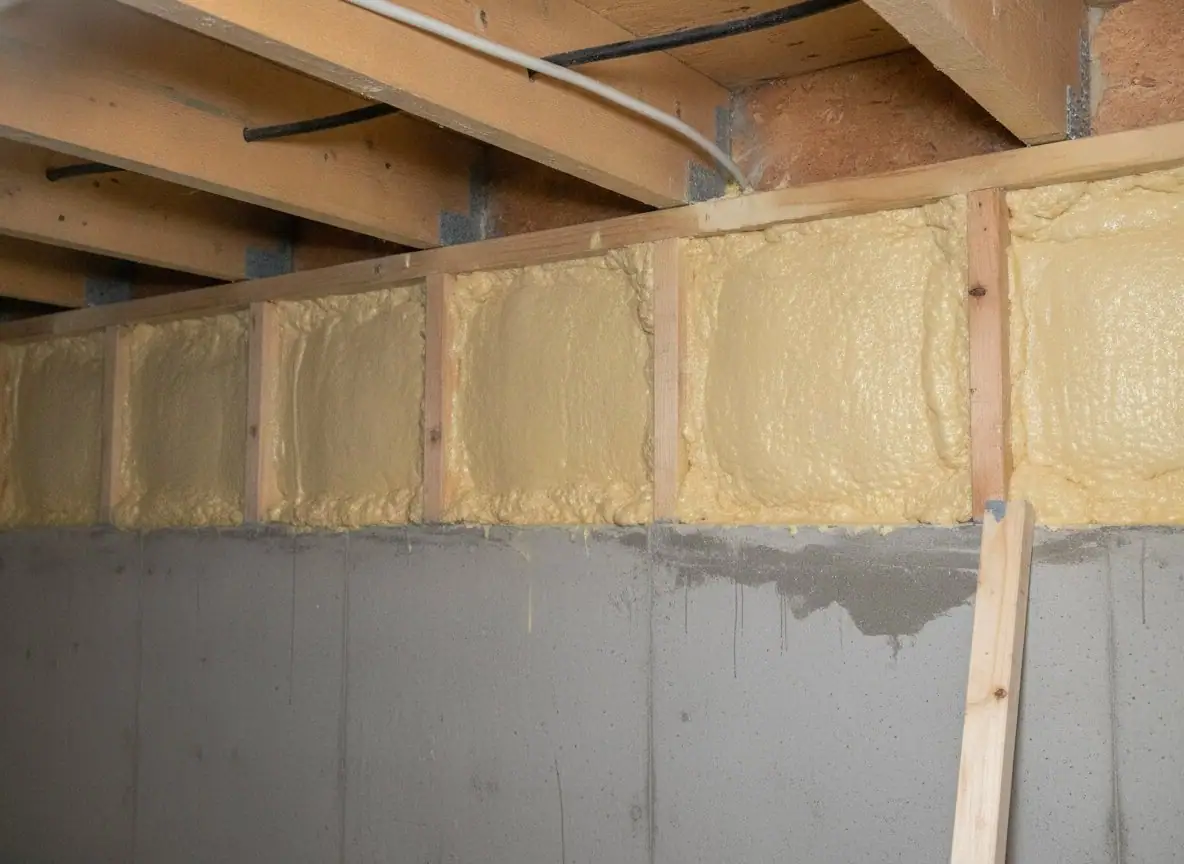
Closed-cell spray polyurethane foam is the premium option for Orange homes requiring both maximum thermal resistance and moisture control. Closed-cell foam achieves R-6.5 per inch and acts as its own vapor barrier — critically important in areas where summer humidity intrusion or occasional winter moisture can degrade other insulation types. This method is particularly effective on masonry block walls and garage-adjacent interior walls. Learn about spray foam insulation services
Fiberglass Batt Insulation
During renovation projects where wall cavities are open — kitchen remodels, room additions, or window replacements — friction-fit fiberglass batt insulation offers a cost-effective and immediately installable solution. R-15 high-density batts fit standard 2×4 stud framing and provide a fast-install option for open-wall projects in Orange’s active remodeling market.
Injection Foam Insulation
For finished walls where blown-in drilling is not aesthetically acceptable — particularly in historic homes in the Old Towne Orange Historic District — low-pressure injection foam provides an effective retrofit. The foam is injected through small ports and expands to fill cavities without the moisture content of wet-spray products.
Wall Insulation Cost in Orange, CA
Understanding the cost of wall insulation in Orange, CA helps homeowners budget accurately and evaluate the return on investment from reduced utility bills and improved comfort.
Typical Price Ranges
- Dense-Pack Blown-In (Retrofit): $1.50–$2.50 per square foot of wall area. A typical 1,500 sq. ft. Orange home with approximately 800 sq. ft. of insulate-able exterior wall area can expect to pay $1,200–$2,000 for a complete blown-in retrofit.
- Spray Foam (Closed-Cell): $3.50–$5.50 per square foot installed. Open-wall applications during remodels run $2.00–$3.50 per square foot. A full exterior wall spray foam project on an Orange home averages $2,800–$4,400.
- Fiberglass Batt (Open Wall): $0.50–$1.00 per square foot of wall area, making it the most cost-efficient option for active renovation projects.
- Injection Foam: $2.00–$3.50 per square foot, positioned between blown-in and spray foam in both performance and price.
Read moreShow less
Factors Affecting Wall Insulation Cost in Orange
- Home age and framing dimensions (2×4 vs. 2×6 stud walls)
- Presence of existing insulation requiring removal (add $0.50–$1.00/sq. ft.)
- Number of exterior wall penetrations requiring air sealing
- Access limitations in historic properties in Old Towne Orange
- Permit fees from the City of Orange Building Division (typically $150–$400 for qualifying projects)
Orange-Specific Pricing Notes
Orange County labor rates are 10–15% above the California state average, reflecting regional demand. However, California’s TECH Clean program and Southern California Edison (SCE) rebates — available to Orange residents — can offset $200–$600 of qualifying insulation project costs. Call us at (714) 909-2175 to discuss current rebate eligibility for your home.
Neighborhoods We Serve in Orange, CA
Old Towne Orange
Homes in this nationally registered historic district date from 1905–1945. Craftsman bungalows and Spanish Colonial Revival homes here typically have zero original wall insulation and wood lath interior finishes. Our injection foam and low-impact dense-pack methods preserve historic integrity while achieving modern thermal performance.
Santiago Hills
Developed primarily in the 1980s and 1990s, Santiago Hills features larger 2,000–3,500 sq. ft. homes on hillside lots. West-facing walls are highly exposed during afternoon heat events, and Santa Ana wind channeling through Santiago Canyon elevates infiltration risk. Dense-pack and spray foam retrofits are the most common solutions here.
Serrano Heights
One of Orange’s newer master-planned communities, Serrano Heights homes from the late 1990s and early 2000s often have original builder-grade fiberglass batts that have settled or were installed with voids. Upgrade projects here focus on attic-to-wall system integration. Learn about attic insulation services
West Orange (near Chapman Avenue Corridor)
This area contains dense concentrations of 1950s–1970s tract homes adjacent to the SR-57 and SR-55 interchange. Noise abatement is as important a driver as thermal performance, making dense-pack cellulose and closed-cell spray foam the preferred methods.
Wall Insulation Maintenance Tips for Orange, CA Homeowners
- Inspect exterior walls annually for moisture staining after Orange’s winter rain season (December–March). Water intrusion from roof overhangs or window flashing failures can saturate and degrade wall insulation rapidly.
- Check electrical outlet covers on exterior walls for drafts during Santa Ana wind events — foam gaskets behind outlets prevent significant air infiltration.
- Seal any new wall penetrations immediately after cable, plumbing, or HVAC work — each unsealed hole can reduce wall R-value effectiveness by 10–15% in that cavity.
- After any rodent activity — particularly in older Orange homes near Santiago Creek — inspect wall cavities for damaged or displaced insulation that may require spot replacement.
- Monitor your SCE energy bills year-over-year. A 15% or greater increase in summer energy costs without a rate change may indicate insulation settling or damage.
- Repaint or re-seal exterior stucco cracks promptly — stucco is the primary weather barrier for most Orange homes, and breaches allow moisture to compromise wall cavity insulation.
- Schedule a professional thermal imaging scan every 7–10 years to identify any new voids or performance degradation in your wall insulation system.
Why Choose Home Comfort Insulation for Wall Insulation in Orange, CA
Home Comfort Insulation is a locally operated insulation contractor serving Orange and surrounding Orange County communities. Our team has hands-on experience with the full range of Orange’s housing stock — from pre-war craftsman homes in Old Towne to hillside developments in Santiago Hills — and we bring method-specific expertise to every project.
We offer the full spectrum of insulation services Orange homeowners need: insulation installation, spray foam insulation, attic insulation, blow-in insulation, crawl space encapsulation, crawl space insulation, insulation removal, and insulation replacement — all under one roof and coordinated by a single team that knows your home from the first assessment through the final inspection.
Read moreShow less
We are knowledgeable in California Title 24 compliance requirements and Southern California Edison rebate programs available to Orange residents. Our pricing is transparent, our assessment process is free, and we stand behind our installations. Contact us at (714) 909-2175 to schedule your evaluation today.
FAQ
Frequently Asked Questions: Wall Insulation in Orange, CA
How much does wall insulation cost in Orange, CA?
Wall insulation costs in Orange typically range from $1,200 to $4,400 depending on the method, square footage, and whether old insulation removal is needed. Dense-pack blown-in insulation averages $1,200–$2,000 for a typical Orange home, while spray foam projects run $2,800–$4,400. Southern California Edison rebates may offset $200–$600 of your total cost. Call us at (714) 909-2175 for a free site-specific estimate.
How long does wall insulation installation take in Orange?
Most wall insulation retrofit projects in Orange homes are completed in one full day. Blown-in dense-pack applications for a 1,500–2,000 sq. ft. home typically take 4–6 hours of installation time. Projects requiring insulation removal first may extend to 1.5–2 days. Open-wall spray foam or batt projects during active renovations can be completed in 2–4 hours depending on the scope.
Do I need a permit for wall insulation in Orange, CA?
Simple retrofit insulation projects — such as adding blown-in insulation to existing walls without structural changes — often do not require a permit from the City of Orange Building Division. However, wall insulation associated with room additions, ADU construction, or permitted remodels requires Title 24 compliance documentation and inspection. We assess permit requirements for every project at no charge during our initial evaluation.
What R-value do I need for wall insulation in Orange?
For Orange, CA — located in California Climate Zone 8 — the California Energy Commission recommends a minimum of R-13 for 2×4 framed exterior walls and R-20 or higher for 2×6 framing. Achieving R-15 to R-21 in existing 2×4 cavities through high-density blown-in or spray foam significantly reduces cooling loads during Orange’s summer heat events.
Can wall insulation be added to my older Orange home without tearing down drywall?
Yes. Dense-pack blown-in insulation and injection foam methods are specifically designed for retrofit applications in existing homes without full wall demolition. Small access holes (2 inches or smaller) are drilled through exterior sheathing or interior drywall, filled with insulation, and patched. This approach is commonly used in Old Towne Orange and other established neighborhoods where preserving wall finishes is important.
Will wall insulation reduce noise from the SR-55 or SR-57 freeway near my Orange home?
Yes, significantly. Dense-pack cellulose and closed-cell spray foam both improve a wall’s STC (Sound Transmission Class) rating by 8–12 points compared to an uninsulated cavity. For homes within a half-mile of Orange’s major freeway corridors, this translates to a noticeable reduction in interior road noise — approximately 8–12 decibels, which is perceptible as a roughly 50% reduction in perceived loudness.
Is spray foam or blown-in insulation better for Orange’s climate?
Both are effective in Orange’s Mediterranean climate, but they serve different needs. Blown-in cellulose is ideal for whole-house retrofit applications where cost efficiency and minimal disruption are priorities. Closed-cell spray foam is the better choice where maximum R-value per inch, moisture resistance, and structural rigidity are needed — such as garage walls, masonry walls, or areas with known moisture risk. We assess your specific conditions and recommend accordingly. Compare spray foam options
Does Home Comfort Insulation serve all of Orange, CA?
Yes. We serve all neighborhoods throughout Orange, CA, including Old Towne Orange, Santiago Hills, Serrano Heights, the Chapman Avenue corridor, Nohl Ranch, and all surrounding communities within Orange County. Call (714) 909-2175 to confirm service availability for your address.
Get a Free Wall Insulation Estimate in Orange, CA Today
Don’t let under-insulated walls drive up your energy bills through another brutal Orange summer or expose your family to Santa Ana wind drafts this fall. Home Comfort Insulation is ready to assess your home, recommend the right solution, and complete the installation with minimal disruption to your daily routine.
Whether your home is a 1920s craftsman in Old Towne, a 1980s hillside property in Santiago Hills, or a newer build in Serrano Heights, we have the methods, experience, and local knowledge to get it right.
Call us at (714) 909-2175 to schedule your free on-site evaluation. We’re proud to serve Orange, CA and the surrounding Orange County communities with professional, reliable wall insulation services. Contact us to schedule your free assessment
Get in touch
Find insulation help near you
Request a free estimate online or give us a call — our team will follow up quickly.
- Call us(714) 909-2175
- Visit1650 N Glassell St, Orange, CA 92867
- HoursMon-Sun 07:00-19:00