Air Sealing in Orange, CA
Professional Air Sealing in Orange, CA — Licensed, Insured & Locally Owned
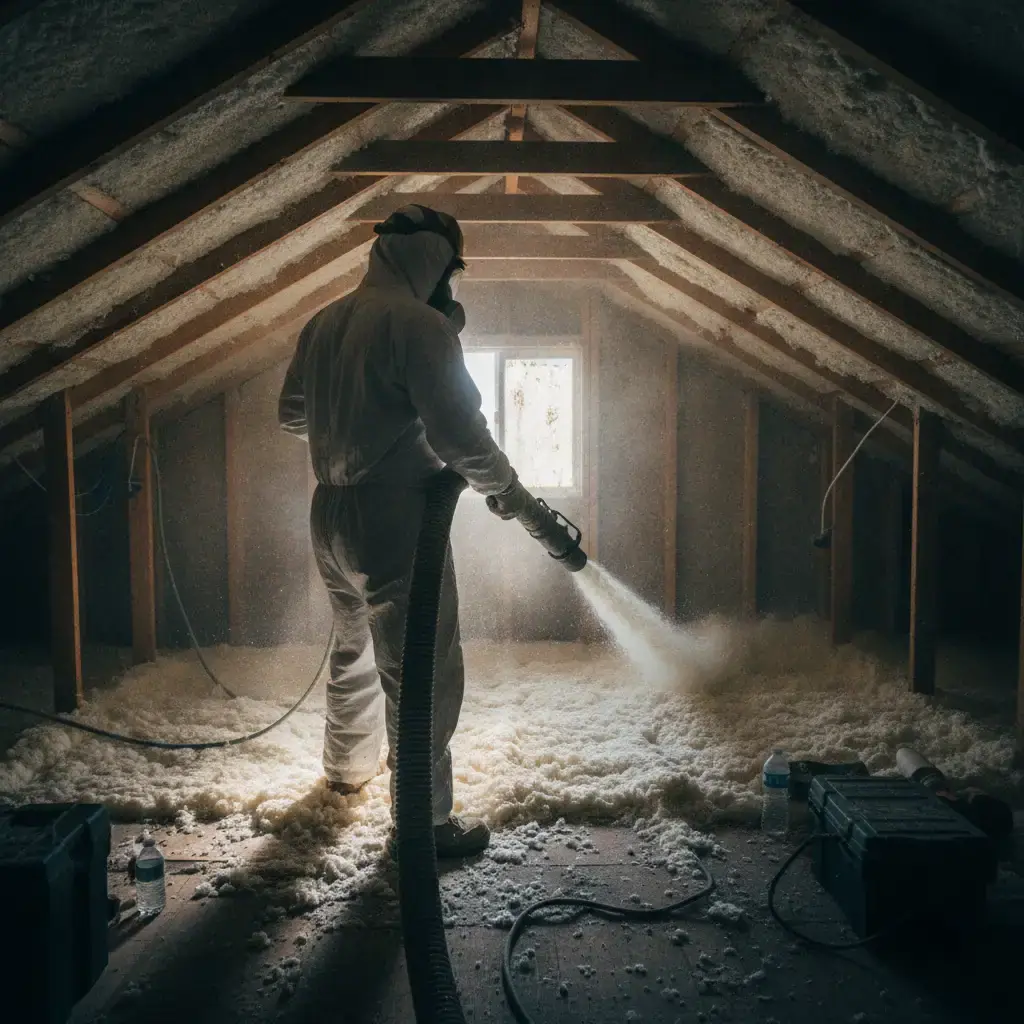
Air sealing is the process of identifying and closing gaps, cracks, and openings in your home’s building envelope — the barrier between conditioned indoor air and the outside environment. These penetrations allow unconditioned air to infiltrate your living spaces and let your expensive heated or cooled air escape, driving up energy bills and reducing comfort year-round.
In Orange, CA, the combination of warm Mediterranean summers, cool marine-influenced nights, and aging housing stock makes air sealing not just a luxury but a genuine necessity. Homes throughout Orange lose significant energy through attic bypasses, wall penetrations, and foundation gaps — issues that are especially common in the city’s abundant mid-century and post-war neighborhoods.
Read moreShow less
At Home Comfort Insulation, we specialize in professional air sealing services tailored to the specific construction styles and climate conditions found throughout Orange. Our trained technicians use proven diagnostic tools and industry-best materials to deliver lasting results. Call us today at (714) 909-2175 to schedule your assessment.
Understanding Air Sealing in Orange, CA
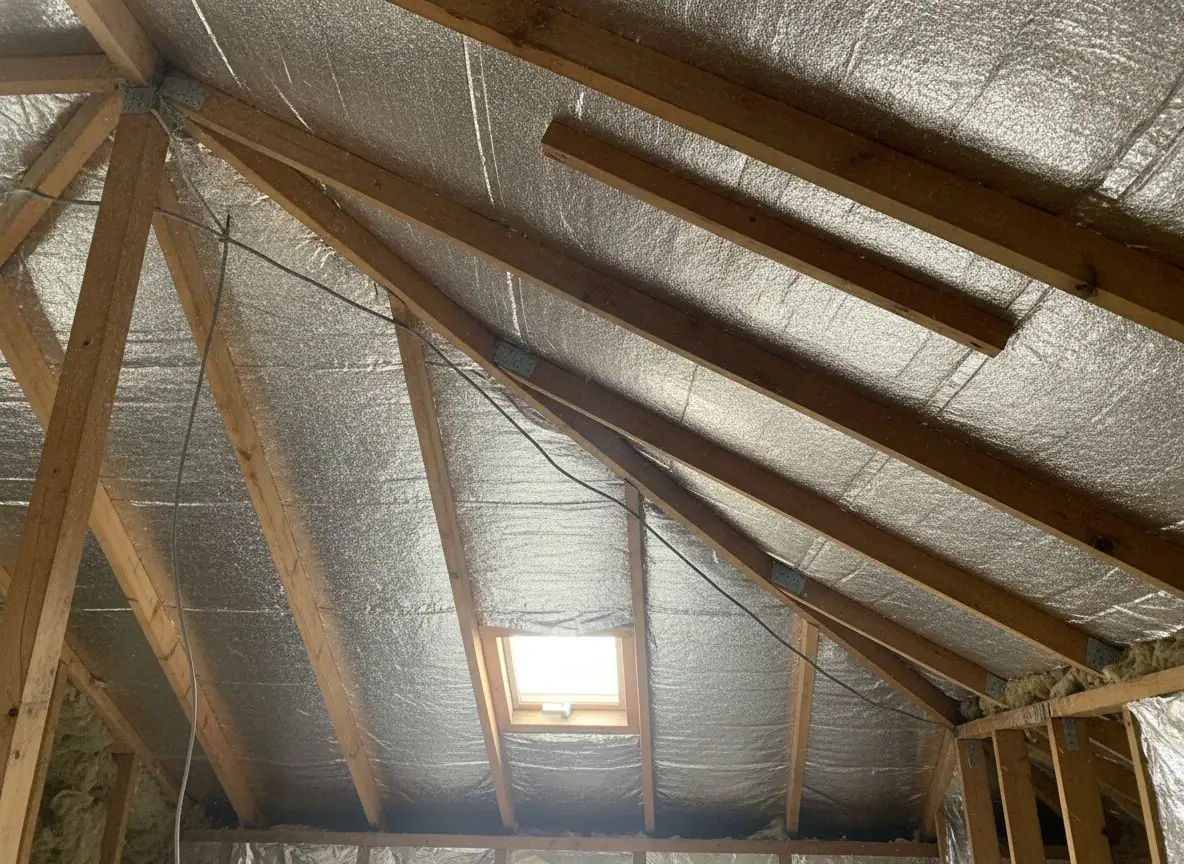
Air sealing refers to a systematic approach to locating and permanently closing unintended air pathways in a building’s envelope. Unlike insulation — which slows the transfer of heat through conduction — air sealing specifically targets convective heat loss and gain caused by air movement. The two work best in tandem: insulation without air sealing is like wearing a thick sweater with all the buttons undone on a windy day.
The science behind air sealing gained traction in the United States during the energy crisis of the 1970s, when federal programs began funding weatherization research. By the 1980s, blower door testing — a diagnostic method that pressurizes a home to locate leaks — became a standard tool for energy auditors. Today, the U.S. Department of Energy and ENERGY STAR programs recommend that homes achieve an air leakage rate of no more than 7 air changes per hour (ACH) at 50 pascals of pressure, with high-performance homes targeting 3 ACH50 or lower.
Read moreShow less
In Southern California, and specifically in Orange, the residential housing landscape is dominated by construction eras that predate modern air-sealing standards. The city saw explosive growth in the 1950s through the 1970s, producing thousands of single-family ranch-style homes, split-levels, and early tract developments. These homes were built when energy was cheap and building codes had minimal requirements for envelope performance. As a result, they are riddled with common air leakage points: open-top interior wall cavities that connect directly to attic spaces, uninsulated attic hatches, plumbing and electrical penetrations that were never sealed, and recessed lighting fixtures installed directly into insulated ceilings.
More recent construction from the 1990s and 2000s improved somewhat, but even homes built in the early 2000s in Orange often fall short of today’s Title 24 California Energy Code requirements. Condominiums and townhomes — plentiful in communities like Serrano Heights and the Villa Park corridor — face additional challenges because shared walls between units create complex pressure dynamics that can drive air infiltration between floors and through partition walls.
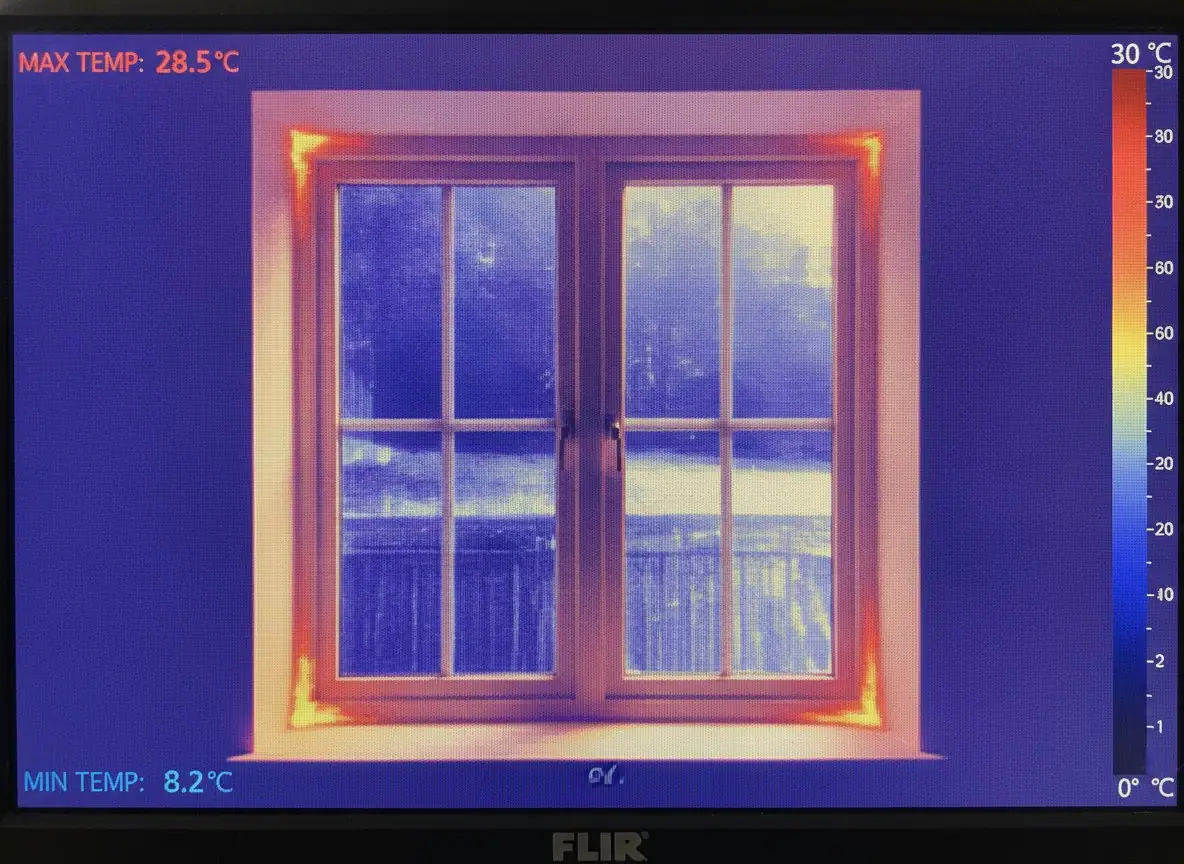
Understanding where your home sits on the spectrum of air tightness is the essential first step. A professional blower door test, combined with thermal imaging, paints a precise picture of where your building envelope is failing — and what it’s costing you every month.
Why Air Sealing Is Needed in Orange, CA
Orange, CA sits in the Santa Ana Valley within northern Orange County, and its specific geography creates a climate profile that makes air sealing particularly impactful. The city experiences an average of 282 sunny days per year, summer highs that routinely reach 95°F to 100°F in inland neighborhoods like Orange Hills, and nighttime lows that can drop into the low 50s during winter months — a temperature swing of 40°F or more within a single 24-hour period during shoulder seasons.
This thermal cycling creates a relentless push-pull effect on your home’s building envelope. During the day, hot exterior air is driven inward through any available gap by stack effect and wind pressure. At night, as indoor temperatures remain elevated, the pressure dynamic shifts and conditioned air leaks outward. Over the course of a year, the Lawrence Berkeley National Laboratory estimates that air infiltration accounts for 25 to 40 percent of heating and cooling energy consumption in California homes — a figure that rises sharply in older Orange neighborhoods like Old Towne, where homes from the 1920s through 1950s were constructed with balloon-frame techniques that leave continuous air channels running from foundation to roofline.
Read moreShow less
The infamous Santa Ana winds — which strike Orange County multiple times between September and March each year — present a particularly intense air sealing challenge. During Santa Ana events, sustained winds of 35 to 60 mph funnel through the Brea and Carbon Canyon passes and the Whittier Narrows, creating significant positive pressure on windward facades. In homes with poor envelope integrity, these events can cause interior humidity to drop to 10 to 15 percent relative humidity, desiccating woodwork, aggravating respiratory conditions, and dramatically increasing infiltration-driven heating loads. Residents in neighborhoods like Panorama Heights and the areas along Santiago Canyon Road experience some of the highest sustained wind exposures during these events.
Soil conditions in Orange also influence foundation-level air sealing needs. Much of the city sits atop expansive clay soils — particularly in areas east of the 55 Freeway — that shrink and swell seasonally with moisture changes. This movement gradually widens gaps at the sill plate, the critical joint where the wood framing of your home meets the concrete foundation. Over decades, homes in neighborhoods like Prospect Park and the tracts along Katella Avenue develop measurable cracks at this junction that admit both outdoor air and soil gases including radon.
Orange County’s ongoing drought conditions, periodically intensified by La Niña climate patterns, further dry out the wood framing of older homes, causing structural members to shrink and creating new air pathways year after year. Homes that were adequately sealed a decade ago may have developed significant new leakage sites simply through natural material aging. This is why periodic re-inspection — ideally every five to seven years — is recommended for homes in this region.
Free, no-obligation estimates
Talk to Home Comfort Insulation
Tell us what you need and we’ll take it from there.
Signs You Need Air Sealing in Orange, CA
Energy and Comfort Indicators
- Monthly electricity bills that spike above $250 to $350 during July and August despite normal usage habits
- Rooms that never seem to reach the thermostat setpoint, especially south- and west-facing rooms during summer afternoons
- Noticeable drafts near electrical outlets, baseboards, or interior door frames during Santa Ana wind events
- HVAC system that runs almost continuously during peak weather without achieving the set temperature
Indoor Air Quality and Moisture Indicators
- Persistent musty odors that worsen after rain — often a sign of air drawn through crawl spaces or wall cavities
- Excessive indoor dust accumulation, particularly near returns and supply registers
- Allergy symptoms that worsen indoors, suggesting outdoor particulates and allergens are infiltrating
- Condensation on interior windows during winter mornings, indicating humidity imbalance from uncontrolled air exchange
Visual and Structural Warning Signs
- Visible daylight around recessed light fixtures in the ceiling when viewed from the attic
- Staining or discoloration on attic insulation directly above interior wall top plates — a telltale sign of air bypasses
- Gaps visible at the sill plate or around plumbing penetrations in the garage or utility areas
- Cold or warm attic hatch cover, indicating no air seal between conditioned and unconditioned space
Urgency note: If you observe multiple symptoms from more than one category, a professional energy audit with blower door testing is strongly recommended before the next cooling or heating season.
Our process
Our Air Sealing Process in Orange, CA
- 01
Whole-Home Energy Assessment (Day 1 — 2 to 3 hours)
Our technician arrives and conducts a thorough walk-through of the property, documenting construction type, HVAC system configuration, visible penetrations, and occupant comfort complaints. We review utility billing history when available to establish baseline
- 02
Blower Door Diagnostic Testing (Day 1 — 1 hour)
We set up a calibrated blower door in your main entry, depressurize the home to 50 pascals, and measure baseline air leakage in CFM50 (cubic feet per minute). A thermal imaging camera and smoke pencils are used simultaneously to locate and document every signi
- 03
Prioritized Leakage Site Report (Day 1 — delivered digitally)
We provide a ranked list of air leakage sites organized by impact and access difficulty. You receive clear photos, thermal images where applicable, and recommended remediation methods — giving you full transparency before any work begins.
- 04
Air Sealing Execution (Day 2 to Day 3 — 4 to 8 hours depending on scope)
Technicians address leakage sites systematically: top-down in the attic first (highest impact sites), then foundation/crawl space level, then interior penetrations. Materials are selected based on gap size — caulk for hairline cracks, foam backer rod plus caul
- 05
Insulation Coordination (Day 3, if applicable)
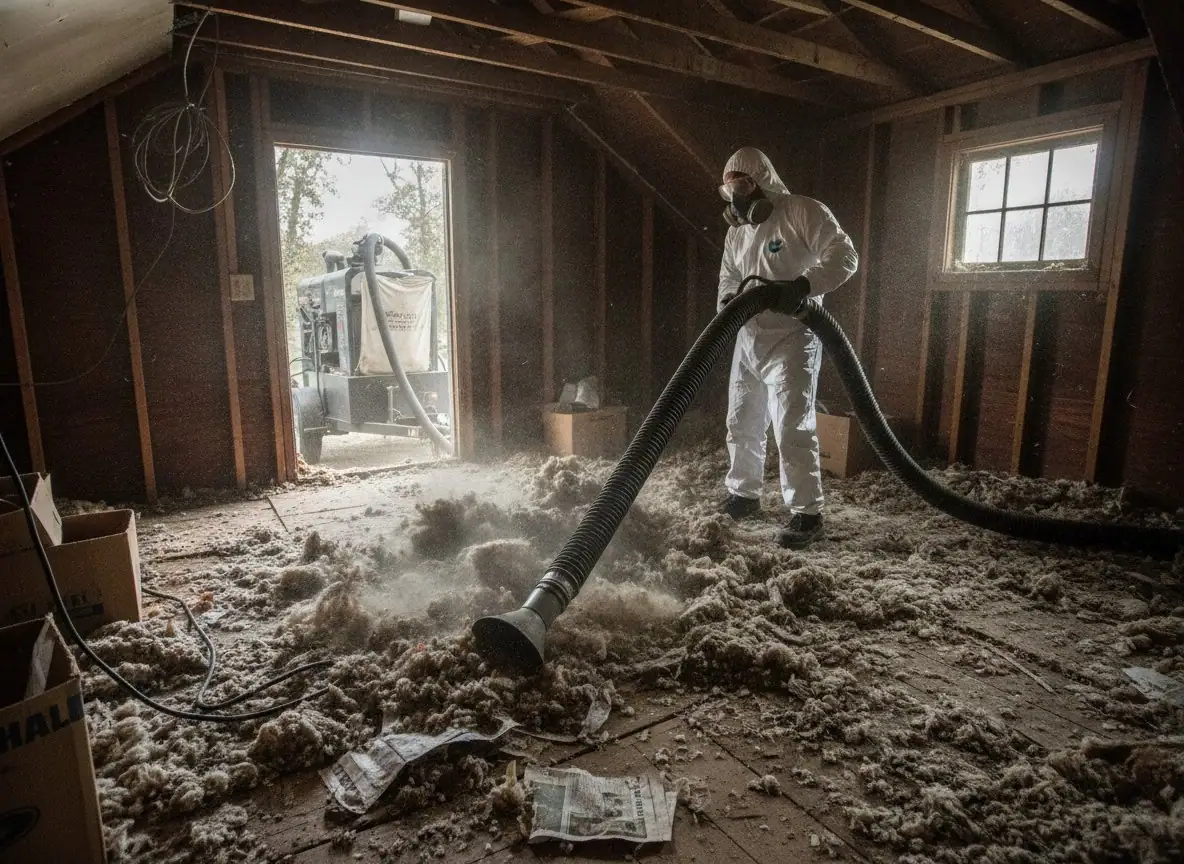
Where air sealing work in the attic has disturbed existing insulation, we restore or upgrade to current California Energy Code minimums (R-38 for attics in Climate Zone 8). Learn more about our attic insulation services
- 06
Post-Sealing Verification Testing (Day 3 — 1 hour)
A second blower door test confirms the achieved reduction in air leakage. We document the before-and-after CFM50 readings and calculate the estimated annual energy savings based on local utility rates from Southern California Edison and SoCalGas schedules.
- 07
Final Walkthrough and Documentation (Day 3 — 30 minutes)
We walk through all completed work with you, deliver a written summary, and provide guidance on any follow-up maintenance or complementary services that would further improve your home’s performance.
Air Sealing Methods and Approaches
Caulking and Sealants
Elastomeric caulk and acoustical sealant are ideal for sealing gaps up to ½ inch wide along stationary joints — around window frames, at baseboards, between different cladding materials, and at penetrations for pipes and wires through drywall. In Orange’s climate, we use sealants rated for exterior temperature ranges of 20°F to 120°F to accommodate the extremes experienced during Santa Ana events and summer heat. This is the most common method used in older Craftsman and Spanish Colonial Revival homes in Old Towne Orange.
Low-Expansion Spray Foam
Single-component polyurethane foam in a can is used for gaps between ½ inch and 3 inches — typical around recessed lights, attic hatch frames, plumbing stacks, and HVAC chases. Low-expansion formulas are specified in areas adjacent to windows and door frames where dimensional lumber may be displaced by over-expanding foam. Learn about our spray foam insulation services
Two-Part Spray Foam
For large bypasses — open top plates, dropped soffit chases, and areas around fireplace surrounds — two-part professional spray foam provides rigid, durable seals that resist compression and maintain performance over time. This is particularly effective in 1960s tract homes in the Santiago Drive and Palmyra Avenue corridors where open framing cavities run the full height of the structure.
Rigid Foam Blocking with Foam Perimeter Seal
Large openings such as attic access hatches, chase tops, and dropped ceiling soffits are best addressed with a rigid foam board cut to fit and then perimeter-sealed with spray foam. This combination provides both an air barrier and thermal resistance — critical for attic hatch covers that lose heat rapidly during Orange’s winter nights.
Crawl Space and Foundation Sealing
For homes with raised foundations — common throughout central and eastern Orange — sill plate sealing with closed-cell foam and foundation vent management are combined with crawl space encapsulation to address ground-level infiltration comprehensively.
Air Sealing Cost in Orange, CA
The cost of professional air sealing in Orange, CA varies based on home size, construction era, accessibility of leakage sites, and the scope of work required. Below are typical investment ranges our Orange customers encounter:
Typical Price Ranges
- Basic air sealing package (up to 1,500 sq ft, newer construction): $350 to $600
- Standard air sealing (1,500 to 2,500 sq ft, 1970s to 1990s construction): $600 to $1,100
- Comprehensive air sealing (2,500+ sq ft or pre-1970 construction): $1,100 to $2,000+
- Air sealing with attic insulation upgrade (combined project): $1,800 to $3,500
- Blower door diagnostic testing (standalone): $200 to $350
Factors That Influence Your Cost
- Construction era: Pre-1960 balloon-frame homes in Old Towne typically require 30 to 50 percent more labor than post-1990 platform-frame construction
- Attic accessibility: Low-slope roofs common on ranch homes along Chapman Avenue require specialized equipment and add to labor time
- Number of penetrations: Homes with many recessed lights, older HVAC systems with exposed ductwork, and multiple plumbing stacks have more leakage sites
- Combination with insulation removal or replacement: Pairing services reduces mobilization costs — learn about insulation removal
Read moreShow less
Rebates and Incentives
Southern California Edison’s Energy Upgrade California program and the federal Inflation Reduction Act’s Section 25C tax credit (up to $1,200 per year for weatherization) can offset a significant portion of air sealing costs for qualifying Orange homeowners. We can provide documentation to support your rebate applications.
Call (714) 909-2175 for a free on-site estimate with no obligation.
Neighborhoods We Serve in Orange, CA
Old Towne Orange
The historic district surrounding Old Towne Orange Plaza contains some of Orange County’s best-preserved Craftsman bungalows, Victorian cottages, and Spanish Colonial Revivals, most built between 1905 and 1940. These homes feature balloon-frame construction, original single-pane windows, knob-and-tube wiring that complicates spray foam applications, and century-old plaster walls with minimal insulation. Air sealing in Old Towne requires delicate techniques that preserve historic fabric while delivering modern performance. Insulation replacement is often needed in tandem
Serrano Heights
This planned community in northeastern Orange, developed primarily between 1998 and 2006, features larger homes on hillside lots exposed to above-average wind speeds. Despite newer construction, many homes here have complex rooflines with multiple attic sections that were inadequately sealed at the framing stage and now show significant thermal bridging on infrared scans.
Orange Hills / Panorama Heights
Homes in the elevated eastern portions of Orange, built largely in the 1970s and 1980s, face direct exposure to Santa Ana wind events. Split-level and multi-story designs create complex pressure differentials between floors that standard air sealing must account for carefully.
Prospect Park and West Orange
Mid-century ranch homes along Prospect Street and the avenues west of the 57 Freeway, built between 1950 and 1965, represent the most common air sealing project profile in our service area — single-story, slab-on-grade or raised foundation, with attic bypasses above every interior partition wall.
Maintenance Tips for Air Sealing in Orange, CA
- Inspect caulk lines annually in October, before Santa Ana season intensifies. Look for cracking, shrinkage, or separation at window frames, door thresholds, and exterior penetrations.
- Check attic hatch seals each spring. Foam gaskets compress over time and should be replaced every five to seven years for continued performance.
- Monitor sill plate areas after the rainy season (December through March). Clay soil swelling from winter rains can open previously sealed gaps at the foundation-to-framing junction.
- Change HVAC filters every 60 days in Orange’s dusty inland climate. Clogged filters increase negative pressure in the system, which amplifies infiltration through unsealed areas.
- Inspect around new utility installations immediately. Plumbers, electricians, and cable technicians frequently create new penetrations that are never re-sealed.
- Test exhaust fan backdrafting annually. Hold a piece of tissue near bathroom and kitchen exhaust fans. If it’s drawn inward rather than outward, pressure dynamics may have shifted due to new air sealing elsewhere.
- Schedule a re-inspection every five to seven years, or after any significant remodeling that modifies wall, ceiling, or floor assemblies.
Why Choose Home Comfort Insulation for Air Sealing in Orange, CA
Home Comfort Insulation is a locally focused insulation and air sealing contractor serving Orange and surrounding communities throughout northern Orange County. Our technicians are trained specifically in the construction types and climate conditions prevalent in this region — from the balloon-frame Craftsman homes of Old Towne to the hillside developments of Serrano Heights.
We use calibrated blower door equipment and thermal imaging cameras to deliver diagnostic-driven air sealing — not guesswork. Every project is documented with before-and-after performance data so you can see the measurable impact of the work performed.
Our full-service capabilities mean that air sealing is never performed in isolation. We coordinate seamlessly with attic insulation, spray foam insulation, crawl space insulation, and insulation removal services to deliver comprehensive building envelope solutions in a single mobilization — saving you time and reducing total project cost.
We are committed to transparent pricing, clear communication, and results you can measure. Call us at (714) 909-2175 to speak with a local expert today.
FAQ
Frequently Asked Questions About Air Sealing in Orange, CA
How much does air sealing cost in Orange, CA?
Most Orange homeowners invest between $600 and $1,500 for professional air sealing, depending on home size and construction era. Older homes in areas like Old Towne or Prospect Park tend to fall in the upper range due to balloon-frame construction and more numerous leakage sites. Standalone diagnostic blower door testing typically costs $200 to $350. Combined air sealing and insulation projects often deliver better cost-per-square-foot value — call (714) 909-2175 for a specific estimate.
How long does air sealing take?
A typical air sealing project in an Orange single-family home takes one to two days. Day one covers diagnostics and assessment; day two covers execution and verification testing. Larger homes over 3,000 square feet or those with complex attic configurations may require a third day for completion.
Will air sealing make my home too tight?
No — this is a common concern but rarely a practical issue in pre-2010 Orange homes, which are almost universally under-sealed rather than over-sealed. In the rare case that a home approaches very tight thresholds (below 2 ACH50), we recommend a fresh air ventilation assessment. California’s Title 24 code actually requires mechanical ventilation in new construction precisely because homes are now built so tight, but older Orange homes have tremendous room for improvement before reaching that threshold.
Does air sealing help with Santa Ana wind events?
Significantly. Santa Ana winds can create positive pressures of 5 to 10 pascals on windward walls — enough to drive substantial infiltration through any unsealed opening. Homeowners who have completed professional air sealing consistently report less indoor dryness, reduced dust infiltration, and more stable indoor temperatures during Santa Ana events that affect Orange County between September and March.
Should I air seal before or after adding insulation?
Always air seal first. Adding insulation on top of unsealed attic bypasses is ineffective — warm air will simply flow around the insulation rather than being blocked by it. We recommend a combined approach: air seal all bypasses and penetrations, then install or upgrade insulation to current California Energy Code minimums (R-38 in Climate Zone 8 attics). Blow-in insulation pairs especially well with air sealing projects.
Can air sealing reduce my utility bills in Orange?
Yes. The U.S. Department of Energy estimates that air sealing combined with insulation upgrades can reduce heating and cooling costs by 10 to 20 percent annually. At current Southern California Edison and SoCalGas rates, Orange homeowners with older homes frequently see annual savings of $300 to $700 after a comprehensive air sealing project — representing payback periods of two to four years on typical investments.
Do I need permits for air sealing in Orange, CA?
In most cases, no. Routine air sealing and weatherization work does not require a building permit in Orange under the City of Orange Building Division’s guidelines. However, if air sealing is performed as part of a larger remodel that involves structural changes or new mechanical installations, permits for those scopes of work may apply. We advise clients on any permit requirements specific to their project before work begins.
What is the difference between air sealing and insulation?
Insulation resists heat transfer through conduction and radiation — it slows the movement of heat through solid materials. Air sealing stops convective heat transfer by physically blocking the pathways through which air (and the heat energy it carries) moves between inside and outside. Both are essential components of a complete building envelope strategy. Learn more about insulation installation services we offer alongside air sealing.
Get Professional Air Sealing in Orange, CA Today
Don’t let your home’s comfort and energy efficiency leak away through unsealed gaps and bypasses. Whether you’re dealing with high summer utility bills, uncomfortable rooms during Santa Ana events, or an aging home in Old Towne that’s never been properly weatherized, Home Comfort Insulation has the expertise and equipment to deliver measurable, lasting results.
Our team serves homeowners throughout Orange, CA with diagnostic-driven air sealing services backed by before-and-after blower door testing. We’ll tell you exactly where your home is losing energy — and fix it.
Call us now at (714) 909-2175 to schedule your free on-site estimate. You can also reach out through our website to request a callback at a time that works for your schedule. Serving Orange and all surrounding communities throughout northern Orange County.
Get in touch
Find insulation help near you
Request a free estimate online or give us a call — our team will follow up quickly.
- Call us(714) 909-2175
- Visit1650 N Glassell St, Orange, CA 92867
- HoursMon-Sun 07:00-19:00