Rockwool Insulation in Orange, CA
Energy-Saving Rockwool Insulation for Orange, CA Homes — Licensed & Insured
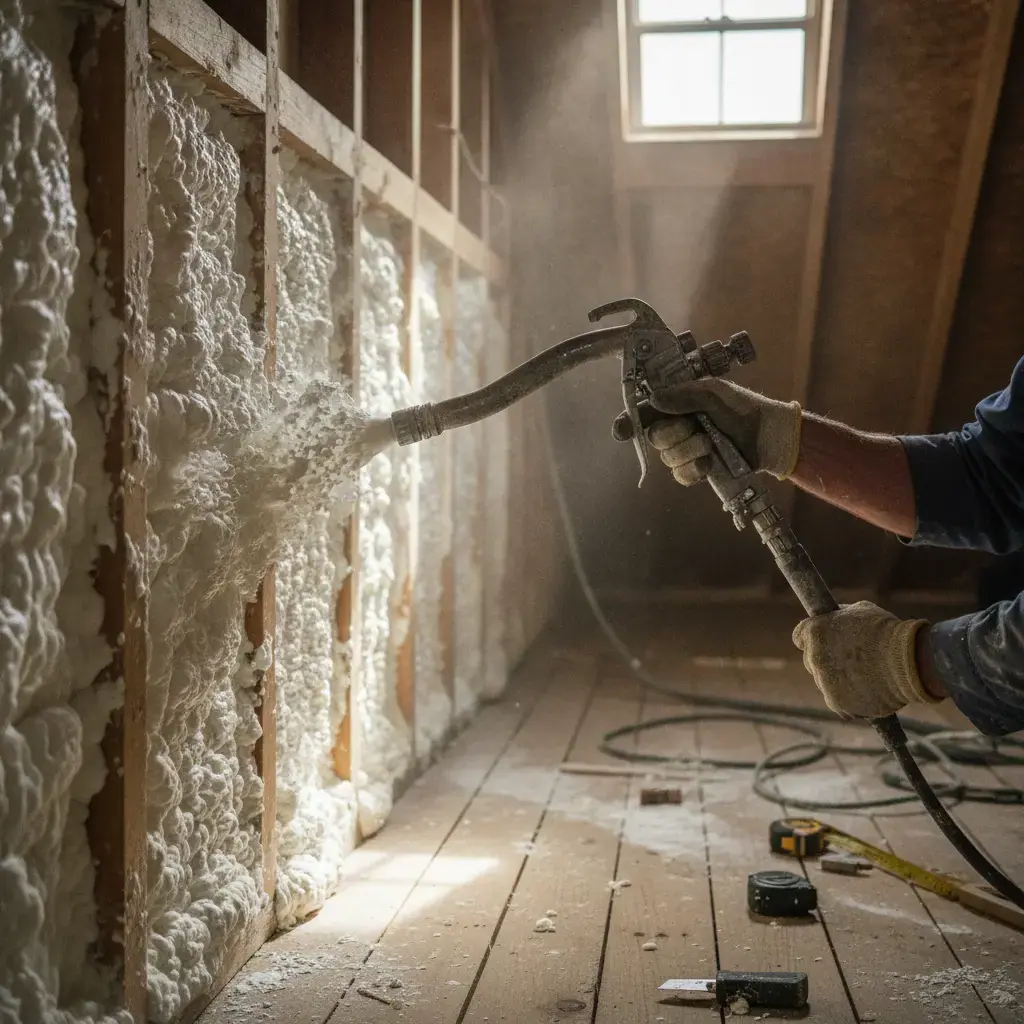
Rockwool insulation — also known as mineral wool or stone wool insulation — is a premium insulating material made from volcanic basalt rock and recycled slag spun into dense, fibrous batts or boards. At Home Comfort Insulation, we specialize in professional Rockwool insulation installation for homes and businesses throughout Orange, California, delivering superior thermal performance, fire resistance, and soundproofing that meets the demanding conditions of Southern California’s inland climate.
Orange, CA presents unique insulation challenges: scorching summer temperatures that routinely exceed 100°F in inland neighborhoods, the Santa Ana wind events that drive wildfire risk, and older housing stock concentrated in historic districts that often lacks adequate modern insulation. Home Comfort Insulation brings localized expertise to every project — from century-old craftsman bungalows near Old Towne to mid-century ranch homes in Orange Hills. Our team understands Orange’s specific building codes, microclimates, and energy efficiency requirements, making us the trusted choice for Rockwool insulation in Orange, CA.
Understanding Rockwool Insulation
Rockwool insulation, commercially marketed under brands like ROCKWOOL (formerly Roxul), is manufactured by melting basaltic rock and industrial slag at temperatures exceeding 2,900°F, then spinning the molten material into fine, interlocking fibers. The resulting product is compressed into rigid boards, flexible batts, or loose-fill granules that trap air within millions of tiny pockets — the fundamental mechanism behind its outstanding thermal resistance.
Stone wool insulation was first developed in Europe in the early 20th century, with commercial production scaling significantly in Scandinavia during the 1930s and 1940s. Its adoption in North America accelerated after World War II as builders sought materials that could withstand both extreme temperatures and fire hazards. By the 1980s, Rockwool had become a preferred choice for commercial construction in California, and over the past two decades residential adoption has surged as homeowners recognize its advantages over traditional fiberglass batts.
Read moreShow less
In Orange County and across greater Los Angeles, Rockwool is particularly well-suited to the predominant building types:
- Craftsman and Victorian-era homes (pre-1940): Common in Old Towne Orange and surrounding historic neighborhoods, these structures were built with minimal or no insulation. Rockwool’s flexible batts can be retrofitted into existing wall cavities and attic spaces with minimal disruption to historic plaster and woodwork.
- Mid-century tract homes (1950s–1970s): Widespread across central Orange, these homes typically feature 2×4 wall framing that limits cavity depth. Rockwool’s high R-value per inch (R-3.0 to R-3.3 per inch) maximizes performance within constrained spaces.
- Contemporary builds and ADUs: Modern construction in Orange increasingly specifies Rockwool for its dual role as both insulation and fire blocking, supporting compliance with California Building Code Chapter 7A requirements for wildland-urban interface zones.
Rockwool’s non-combustible nature is critical in Southern California. The material does not ignite, burn, or melt below 2,150°F, providing a meaningful buffer during the fast-moving wildfires and ember showers associated with Santa Ana wind events. Additionally, its density — typically 1.7 to 8 pounds per cubic foot depending on product type — delivers exceptional sound transmission class (STC) ratings, reducing the noise transfer between living spaces that affects quality of life in Orange’s denser residential neighborhoods.
Learn more about our spray foam insulation services or explore our attic insulation solutions to compare which product best suits your Orange, CA home.
Why Rockwool Insulation Is Needed in Orange, CA
Extreme Heat and the Orange Inland Temperature Gap
Orange sits approximately 15 miles from the Pacific coast, far enough inland to experience the “thermal amplification” effect where marine layer cooling has limited reach. NOAA climate records for Orange County show that inland communities like Orange, Anaheim Hills, and Villa Park regularly record summer highs 10–18°F warmer than coastal areas. During the August 2020 heat event — one of the most severe on record in Southern California — parts of Orange registered temperatures of 109°F. Attics in homes without adequate insulation can reach 150°F or higher during such events, driving cooling loads that can spike electricity bills by 40–60% compared to well-insulated homes. Rockwool batts in attic spaces maintain a stable thermal barrier, reducing radiant heat transfer from the roof deck into living spaces.
Santa Ana Wind Events and Wildfire Ember Exposure
The National Weather Service defines Red Flag conditions in Orange County when Santa Ana winds exceed 25 mph with relative humidity below 15%. These conditions occur most frequently between October and December, with notable destructive events including the 2017 Canyon Fire 2 (which threatened neighborhoods along the Anaheim Hills and Orange border on October 9, 2017) and the 2006 Freeway Complex Fire. Homes in Orange Hills, Serrano Heights, and areas adjacent to Santiago Canyon Road face elevated ember intrusion risk. Rockwool’s non-combustible fiber matrix provides critical resistance to ignition at attic penetrations, soffit vents, and wall assemblies where embers can lodge.
Aging Housing Stock with Thermal Deficiencies
The City of Orange contains one of Southern California’s most intact historic residential districts. Old Towne Orange — a National Register Historic District — encompasses approximately 1,300 structures, many built between 1887 and 1940. A significant portion of these homes were constructed before California’s first residential energy code (Title 24) took effect in 1978, meaning they were built with little or no wall insulation and often only rudimentary attic coverage. California Energy Commission data suggests that pre-1978 homes in inland Southern California consume 25–35% more energy for heating and cooling than code-compliant modern homes. Retrofitting with Rockwool addresses this gap while accommodating the structural characteristics of older wood-framed construction.
Mediterranean Climate Swings and Condensation Risk
Orange experiences a semi-arid Mediterranean climate (Köppen classification BSk/Csa boundary) with cool, occasionally wet winters and hot, dry summers. Winter lows in January average 44°F, and nighttime temperatures can drop into the upper 30s°F in elevated neighborhoods like Orange Hills and Panorama Heights. This daily temperature cycling — combined with the region’s low relative humidity — creates conditions where inadequately insulated wall cavities and crawl spaces are susceptible to intermittent condensation, particularly in the brief winter rain season. Rockwool’s hydrophobic fiber treatment causes water to bead and drain rather than absorb, significantly reducing moisture-related degradation, mold risk, and the structural decay that can develop in Orange’s older wood-framed homes over decades.
Title 24 Energy Code Compliance
California’s Title 24 Part 6 standards — updated with each building code cycle — impose increasingly stringent R-value requirements for residential construction in Orange County’s Climate Zone 8. Current requirements mandate a minimum of R-38 for attic insulation and R-13 for exterior wall cavities in new construction. Rockwool products meet or exceed these benchmarks while also satisfying fire and air barrier requirements simultaneously, streamlining permit approvals with the City of Orange Building Division.
Free, no-obligation estimates
Talk to Home Comfort Insulation
Tell us what you need and we’ll take it from there.
Signs You Need Rockwool Insulation in Orange, CA
Energy Performance Indicators
- Monthly summer electricity bills exceeding $250–$350 for a typical 1,500–2,000 sq ft Orange home despite normal AC usage patterns
- HVAC system running continuously during afternoon heat peaks (3–6 PM) without reaching set temperature
- Noticeable temperature differences of 5°F or more between upstairs rooms and the ground floor
- Heating bills that spike disproportionately during January cold snaps
Physical and Structural Warning Signs
- Visible gaps, compression, or missing sections in attic insulation when viewed from the access hatch
- Fiberglass batts that appear flattened, discolored, or water-stained — indicating moisture intrusion or age-related degradation
- Cold or hot walls to the touch during extreme weather — a direct indicator of missing or failed wall insulation
- Evidence of pest activity (rodent tunneling, insect nesting) within existing insulation materials
- Crawl space moisture, musty odors, or visible condensation on floor joists
Comfort and Noise Complaints
- Excessive road or neighborhood noise audible inside — particularly relevant along Chapman Avenue, Katella Avenue, or near the SR-55 and I-5 corridors
- Drafts near electrical outlets, baseboards, or window frames
- Rooms that feel uncomfortably warm in summer even with blinds closed
Urgency Indicators
If your home was built before 1980, has never had an insulation audit, or if you’ve recently experienced roof damage during a Santa Ana wind event, schedule an inspection immediately. Deteriorated insulation compounds wildfire risk in addition to energy losses.
Our process
Our Rockwool Insulation Installation Process in Orange, CA
- 01
Comprehensive On-Site Assessment (1–2 Hours)
Our certified insulation specialist visits your Orange property to conduct a thorough evaluation. Using thermal imaging cameras and blower door testing when applicable, we assess current insulation R-values, identify air leakage points, and evaluate moisture c
- 02
Detailed Written Proposal and Permit Review (1–3 Business Days)
We provide a line-item written proposal specifying Rockwool product selection, target R-values, installation areas, and projected energy savings. Where required by the City of Orange Building Division (particularly for additions, ADU conversions, or whole-hous
- 03
Preparation and Existing Insulation Removal (Half Day to Full Day)
Where existing insulation is degraded, contaminated, or incompatible, we perform complete professional insulation removal prior to Rockwool installation. Our crew uses HEPA-filtered vacuum equipment and containment protocols, particularly important in older Or
- 04
Air Sealing (2–4 Hours)
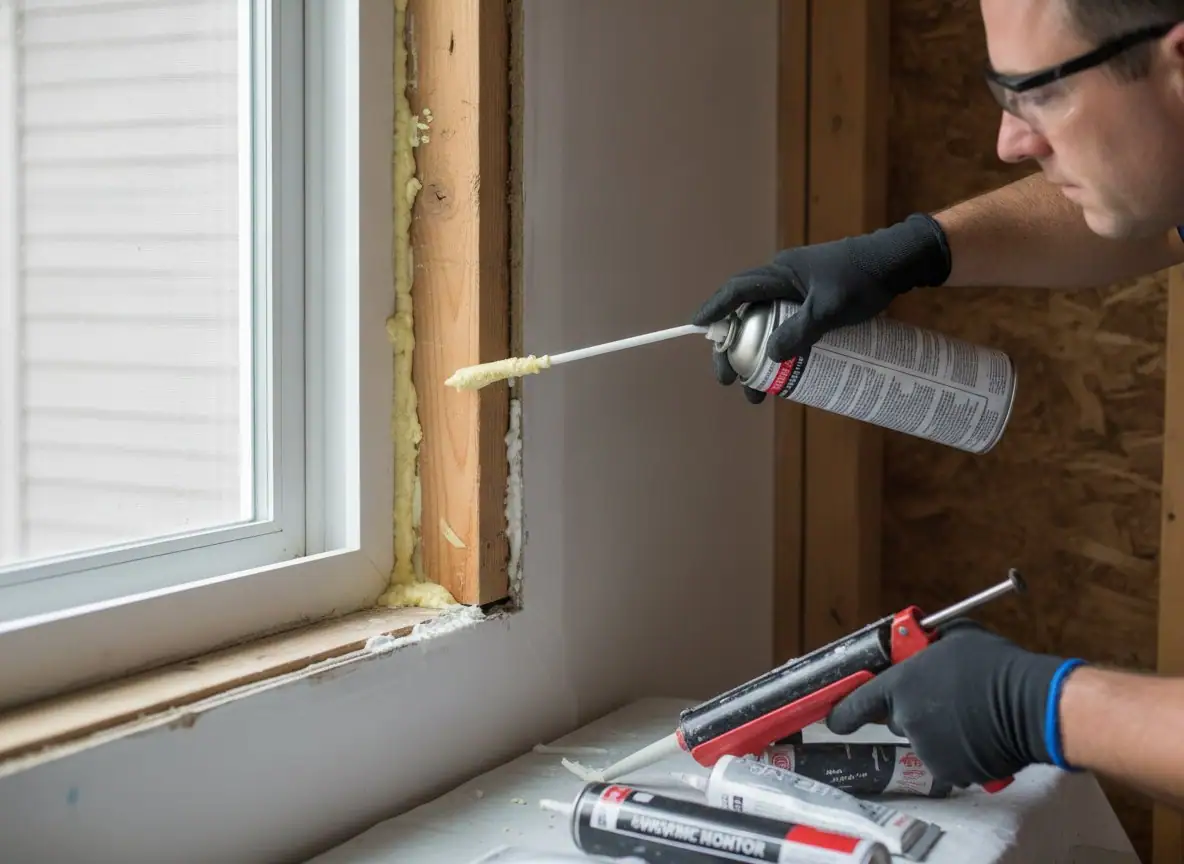
Before installing Rockwool batts, we seal all penetrations — electrical boxes, plumbing chases, attic bypasses, and top plates — using fire-rated caulk and foam. This step is especially important in Orange’s older craftsman homes, where balloon-framing creates
- 05
Rockwool Installation (4–8 Hours Depending on Scope)
Our installers cut and fit Rockwool batts to precise dimensions, ensuring full contact with framing members without compression (which reduces R-value). In attic applications, we install to the City of Orange-required minimum depth markers. For exterior walls
- 06
Quality Inspection and Documentation (1 Hour)
Upon completion, our project lead performs a walk-through inspection, verifying uniform coverage, proper vapor management, and code compliance. We provide photographic documentation and an updated insulation certificate for your home records — useful for insur
- 07
Final Cleanup and Client Walkthrough (30–60 Minutes)
We remove all waste materials, including Rockwool offcuts, packaging, and removed legacy insulation. We walk you through completed work, explain maintenance recommendations, and answer questions before collecting final signatures.
Rockwool Insulation Methods and Approaches
Rockwool Batt Installation (Most Common)
Pre-cut Rockwool batts — available in standard widths of 15 inches (for 16-inch on-center framing) and 23 inches (for 24-inch on-center framing) — are the most widely used format for wall cavities, attic floors, and floor assemblies. In Orange’s mid-century tract homes, this is typically the primary method for both new insulation and insulation replacement projects. Rockwool batts are friction-fit into cavities without stapling or adhesive, making them ideal for retrofit work in occupied homes.
Rockwool Comfortboard (Continuous Exterior Insulation)
Rigid Rockwool Comfortboard panels installed on the exterior face of wall sheathing eliminate thermal bridging through studs — a significant heat loss pathway in standard framed construction. This method is particularly effective during siding replacement projects on Orange’s older ranch homes and is increasingly specified in ADU construction to meet enhanced Title 24 performance requirements.
Rockwool Safe’n’Sound (Interior Partition Soundproofing)
Specifically engineered for interior partition walls and floor-ceiling assemblies, this higher-density Rockwool product delivers STC ratings of 45–52 when combined with appropriate drywall assemblies. This is a popular upgrade in Orange’s multi-generational homes, duplexes, and properties near high-traffic corridors including Chapman Avenue and the 55 Freeway.
Combination Systems: Rockwool Plus Spray Foam
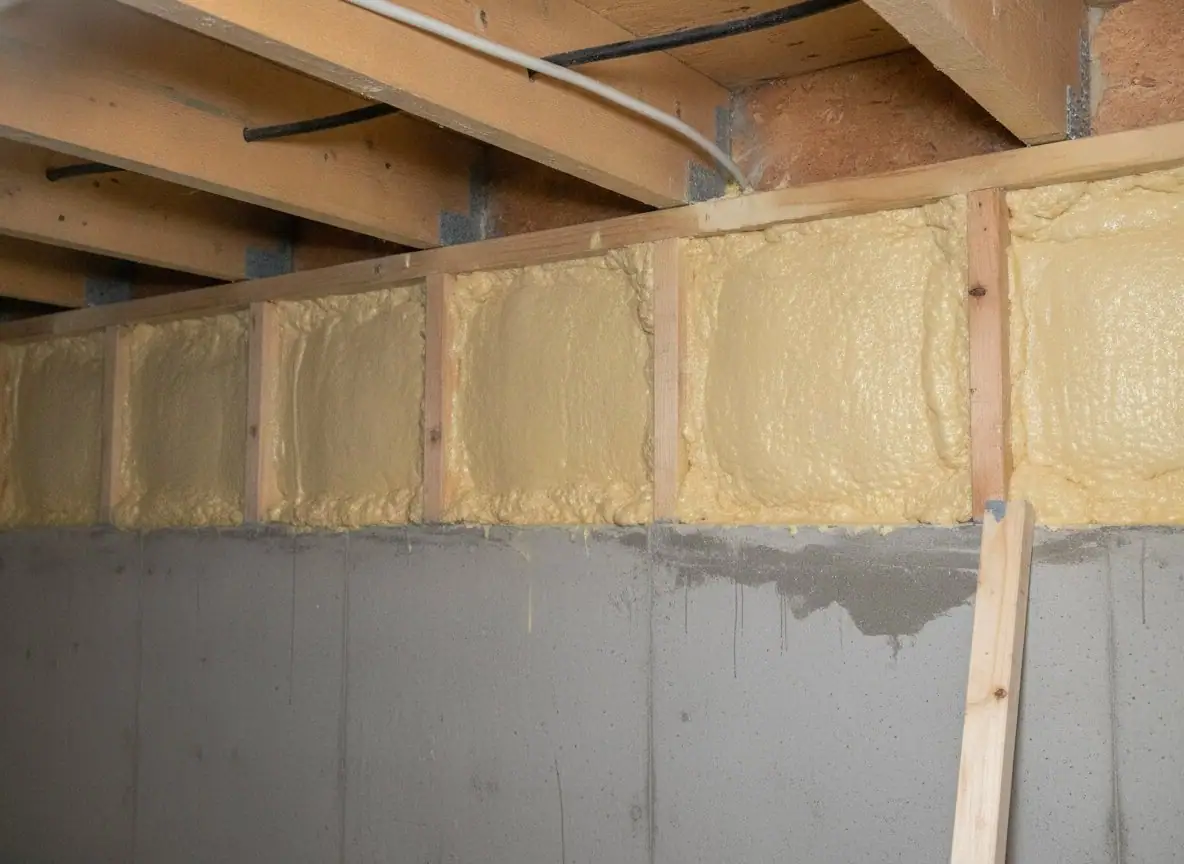
In crawl spaces and rim joist applications — common in Orange’s older hillside homes in Orange Hills and Panorama Heights — we combine closed-cell spray foam insulation at the rim joist for air sealing with Rockwool batts for primary thermal resistance. This hybrid approach delivers optimal performance at a balanced cost point.
Rockwool for Crawl Space and Subfloor Applications
In homes with vented crawl spaces — prevalent in pre-1960 construction throughout central Orange — Rockwool batts installed between floor joists provide significant thermal improvement and moisture management. We often coordinate this work alongside crawl space encapsulation for comprehensive moisture control.
Rockwool Insulation Cost in Orange, CA
Understanding the cost of Rockwool insulation in Orange, CA helps homeowners budget accurately and evaluate competing proposals. Below are typical price ranges based on our experience serving the Orange market.
Typical Price Ranges
- Attic Rockwool insulation (batt installation, 1,000–1,500 sq ft attic floor): $1,800–$3,200 installed
- Exterior wall retrofit with Rockwool batts (per 1,000 sq ft of wall area): $1,500–$2,800 installed
- Interior partition soundproofing (per room): $600–$1,400 installed
- Crawl space Rockwool batt installation (per 1,000 sq ft): $1,200–$2,200 installed
- Combination crawl space encapsulation + Rockwool: $3,500–$6,000 for a typical Orange home
Key Cost Factors
- Home age and accessibility: Older homes in Old Towne Orange and historic districts may require additional labor for careful access and legacy material handling
- Existing insulation removal: Add $500–$1,500 for complete attic insulation removal depending on volume and material type
- Permit fees: City of Orange building permits for insulation work typically range from $150–$400 depending on project scope
- Product specification: Rockwool Safe’n’Sound and Comfortboard rigid panels carry premium pricing vs. standard ComfortBatt
- Air sealing scope: Comprehensive air sealing adds $300–$800 but delivers significant ROI through energy savings
Read moreShow less
Orange, CA Pricing Notes
Orange County labor markets trend 15–20% above national averages for insulation installation, reflecting higher local wages and contractor overhead. However, Southern California Gas Company and SCE (Southern California Edison) periodically offer rebate programs for qualifying insulation upgrades that can offset $200–$600 of project cost. Ask our team about current available incentives when you call (714) 909-2175.
Neighborhoods We Serve in Orange, CA
Old Towne Orange
Centered on the historic traffic circle at Chapman and Glassell, Old Towne features one of California’s largest concentrations of pre-1940 residential architecture. Craftsman bungalows, Spanish Colonial revivals, and Victorian-era homes here were built with minimal insulation. Our crews are experienced in working sensitively within these structures, preserving plaster walls and architectural details while retrofitting modern Rockwool performance.
Orange Hills and Panorama Heights
These elevated hillside communities, developed primarily in the 1970s through 1990s, sit in close proximity to Santiago Canyon and the Cleveland National Forest — placing them in high wildland-urban interface fire risk zones. Rockwool’s non-combustible properties are particularly valuable here, where ember intrusion during Santa Ana events is a documented threat.
Serrano Heights and East Orange
Newer planned communities developed in the 1990s and 2000s often feature larger floor plans with complex rooflines that create insulation coverage gaps in attic corners and cathedral ceiling sections. We conduct detailed attic mapping to ensure complete Rockwool coverage throughout these architecturally complex homes.
Villa Park Adjacent and Central Orange
Mid-century ranch homes and post-war tract developments throughout central Orange — built between 1948 and 1975 — represent the largest volume of our Rockwool retrofit projects. These homes typically have 2×4 wall framing and aging fiberglass batts that have compressed and settled over 40–70 years, dramatically reducing their effective R-value.
Rockwool Insulation Maintenance Tips for Orange, CA Homeowners
- Annual attic inspection (September–October): Before Santa Ana season peaks, visually inspect your attic insulation for displacement, moisture staining, or pest activity. Early October is ideal in Orange County’s calendar.
- Check for pest entry points: Roof rats and squirrels are active in Orange’s urban tree canopy. Seal any soffit gaps or roof penetrations annually to prevent rodent nesting in insulation.
- Monitor crawl space moisture after winter rains: Orange’s brief but intense winter rain season (typically December–March) can introduce moisture into underfloor spaces. Inspect crawl space Rockwool batts after significant rain events.
- Avoid compressing attic insulation with storage: Many Orange homeowners use attic space for seasonal storage. Lay down walkboards rather than stepping directly on Rockwool batts, which lose R-value when compressed.
- Check HVAC duct connections within insulated spaces: Disconnected duct sections in attics or crawl spaces can channel unconditioned air directly into insulated cavities, defeating thermal performance.
- Recheck after significant seismic activity: Southern California’s seismic environment — including events along the Whittier and Elsinore fault systems — can shift wall assemblies and disturb insulation in older Orange homes. After any felt earthquake, visually verify wall outlet cover plates remain flush with drywall.
- Schedule a professional inspection every 10–15 years: While Rockwool itself is extremely durable, surrounding building components, air seals, and vapor management systems benefit from periodic professional review.
Why Choose Home Comfort Insulation for Rockwool Insulation in Orange, CA
Home Comfort Insulation is a locally operated insulation contractor with deep roots in the Orange, CA community. We understand the specific building stock, climate challenges, and code requirements that define insulation work in this city — from the historic preservation considerations of Old Towne to the wildfire risk mitigation needs of Orange Hills.
Our team is trained and certified in Rockwool product installation best practices, ensuring that every batt is cut, fitted, and placed to manufacturer specifications and California Title 24 requirements. We are fully licensed and insured to operate in the City of Orange and Orange County, and we handle all permit coordination with the Orange Building Division on your behalf.
Read moreShow less
We offer comprehensive insulation services under one roof: insulation removal, attic insulation, blow-in insulation, spray foam insulation, crawl space insulation, and crawl space encapsulation. This breadth means we can design a complete insulation system for your Orange home rather than offering a one-size-fits-all product.
Our commitment is simple: deliver measurable comfort improvements, verifiable energy savings, and superior workmanship on every project. Call (714) 909-2175 to speak directly with a knowledgeable team member.
FAQ
Frequently Asked Questions: Rockwool Insulation in Orange, CA
Q: How much does Rockwool insulation cost in Orange, CA?
A: Installed costs in Orange typically range from $1.80 to $3.20 per square foot for attic applications and $1.50 to $2.80 per square foot for wall cavity installations. Total project costs vary based on home size, accessibility, and whether existing insulation removal is needed. Most homeowners in Orange invest between $2,000 and $6,000 for a comprehensive Rockwool insulation project. Contact us at (714) 909-2175 for a free itemized quote.
Q: Is Rockwool better than fiberglass for Orange, CA homes?
A: For most Orange homeowners, Rockwool offers meaningful advantages over standard fiberglass batts. Rockwool achieves R-3.0 to R-3.3 per inch vs. approximately R-2.9 per inch for fiberglass, delivers superior fire resistance critical in wildland-urban interface zones, resists moisture and mold growth relevant in crawl space and winter condensation scenarios, and provides significantly better soundproofing. The primary trade-off is cost — Rockwool materials typically run 20–30% more than comparable fiberglass products before installation labor.
Q: How long does Rockwool insulation installation take?
A: A typical Orange home project — covering attic insulation and any crawl space work — is completed in one to two days. Whole-house retrofits including wall cavity work may extend to three or four days. We provide specific timelines in your written proposal before any work begins.
Q: Does Rockwool insulation require a permit in Orange, CA?
A: Standard replacement-in-kind insulation work (replacing existing insulation without structural changes) typically does not require a permit from the City of Orange Building Division. However, insulation work associated with room additions, ADU conversions, or changes to fire-rated assemblies does require permits. We assess permit requirements during your initial consultation and manage all filings on your behalf.
Q: Is Rockwool insulation safe for my family?
A: Yes. Rockwool fibers are classified as non-carcinogenic by the International Agency for Research on Cancer (IARC) and the U.S. National Toxicology Program. Modern Rockwool products are biopersistence-tested and do not pose the health concerns associated with older mineral fiber products. During installation, our crews wear appropriate respiratory protection as a standard safety practice, and occupied spaces are isolated from work areas.
Q: Can Rockwool help with noise from traffic near the 55 Freeway or Chapman Avenue?
A: Absolutely. Rockwool Safe’n’Sound, installed in exterior walls facing high-traffic corridors, achieves Sound Transmission Class (STC) ratings of 45 or higher — a significant improvement over uninsulated or fiberglass-insulated assemblies. Many Orange homeowners living within a half-mile of SR-55, the I-5/SR-57 interchange, or Chapman Avenue report substantially reduced interior noise levels following Rockwool installation.
Q: Does Rockwool insulation help with wildfire protection in Orange Hills?
A: Rockwool is non-combustible and does not contribute to fire spread, which is a meaningful benefit in Orange Hills, Panorama Heights, and areas near Santiago Canyon that sit within Very High Fire Hazard Severity Zones (VHFHSZ) as designated by CAL FIRE. While no single building component guarantees fire survival, Rockwool used at attic penetrations, exterior walls, and eave assemblies reduces ignition pathways during ember showers associated with Santa Ana wind events.
Q: How do I know if my current insulation needs replacement?
A: Key warning signs include energy bills that seem disproportionate to usage, rooms that feel stuffy or temperature-inconsistent, visible deterioration or pest damage in the attic, or a home built before 1980 that has never had an insulation upgrade. We offer free on-site assessments for Orange homeowners — call (714) 909-2175 to schedule. We also offer insulation removal and replacement as a bundled service when existing materials have reached end of life.
Get a Free Rockwool Insulation Quote in Orange, CA
Ready to improve your home’s comfort, reduce your energy bills, and enhance fire and sound resistance with professional Rockwool insulation? Home Comfort Insulation serves Orange, CA and the surrounding communities with expert installation, honest pricing, and a commitment to getting every project right.
Whether you live in Old Towne Orange, Orange Hills, Serrano Heights, or anywhere in between, our team is ready to assess your home and design a Rockwool insulation solution tailored to your needs and budget.
Call us now at (714) 909-2175 to speak with a local insulation specialist and schedule your free on-site evaluation. Don’t let another scorching Orange County summer or Santa Ana wind season pass without the protection and comfort your home deserves.
Get in touch
Find insulation help near you
Request a free estimate online or give us a call — our team will follow up quickly.
- Call us(714) 909-2175
- Visit1650 N Glassell St, Orange, CA 92867
- HoursMon-Sun 07:00-19:00