Insulation Materials & Types in Orange, CA
Energy-Saving Insulation Materials & Types in Orange for Orange, CA Homes — Licensed & Insured
Choosing the right insulation material for your Orange, CA home is one of the most impactful decisions you can make for long-term comfort and energy efficiency. Orange sits in California’s Climate Zone 8, where summers routinely push attic temperatures above 140°F, and coastal air from nearby Newport Beach and Huntington Beach introduces mild but persistent humidity. While winters are mild, nighttime temperature swings of 30°F or more are common — and without proper insulation, your HVAC system works overtime year-round.
R-value measures thermal resistance — the higher the number, the better a material resists heat transfer. In Orange, selecting materials with the right R-value for each location in your home (attic, walls, crawl space) directly determines how well your home handles summer heat gain and winter heat loss. Wildfire risk in nearby hillside areas also makes fire-resistance ratings a meaningful factor for some homeowners.
This guide covers every major insulation material available to Orange homeowners, including R-value ranges, climate-specific pros and cons, ideal applications, and cost estimates — so you can make an informed choice.
Understanding Insulation Types for Orange Homes
Orange homeowners have access to a wide range of insulation materials, each engineered with different performance characteristics. The main categories include spray foam, blown-in loose-fill, fiberglass batts, mineral wool, cellulose, and rigid foam board. No single material is universally best — the right choice depends on where you’re insulating, your home’s construction type, and your specific comfort and budget goals.
Orange’s housing stock spans several decades, with a significant number of homes built between the 1950s and 1980s. Many of these older homes were constructed with minimal insulation or none at all in the attic and walls — a serious liability given today’s energy costs. Newer construction must comply with California’s Title 24 Building Energy Efficiency Standards, which set minimum R-value requirements based on climate zone. For Climate Zone 8, Title 24 generally requires R-38 in attics for new construction and mandates attention to air sealing alongside insulation.
Read moreShow less
Construction type also matters. Wood-frame homes with open wall cavities are well-suited to batts or blown-in materials, while homes with finished walls may require injection foam or dense-pack cellulose. Flat or low-slope roofs, common on mid-century Orange properties, benefit from rigid foam or spray foam solutions. Understanding the interaction between Orange’s climate, your home’s age, and each material’s properties is the foundation of a smart insulation decision.
How Orange’s Climate Affects Your Insulation Material Choice
Orange sits in a climate that demands insulation capable of managing intense radiant heat gain rather than extreme cold. On a summer afternoon, an uninsulated or under-insulated attic in Orange can reach 150°F — transferring that heat load directly into living spaces and forcing air conditioners to work continuously. The priority for most Orange homeowners is high R-value in the attic (R-38 to R-60) combined with thorough air sealing to prevent hot air infiltration.
For homes within 5–10 miles of the coast — including parts of Orange near the 55 and 22 freeway corridors — mild humidity is a secondary consideration. Closed-cell spray foam and mineral wool both offer moisture resistance that loose fiberglass does not. Interior condensation risk is low in Orange compared to humid climates, but vapor management still matters in crawl spaces and unventilated conditioned attics.
Read moreShow less
Wildfire risk is real for Orange homeowners near Santiago Canyon, Peters Canyon, and other open-space interfaces. In these areas, mineral wool batts or closed-cell spray foam in attic assemblies can add a meaningful layer of fire resistance beyond code minimums.
For retrofit projects in walls, dense-pack cellulose or injection foam are the practical choices since they fill closed cavities without major demolition. New construction or gut-renovation projects have the full range of options available. California’s Title 24 and local Orange building permit requirements should guide minimum specifications — but exceeding those minimums is almost always cost-effective over a 10–15 year horizon given Southern California energy rates.
Free, no-obligation estimates
Talk to Home Comfort Insulation
Tell us what you need and we’ll take it from there.
Insulation Materials Available in Orange, CA
Spray Foam Insulation
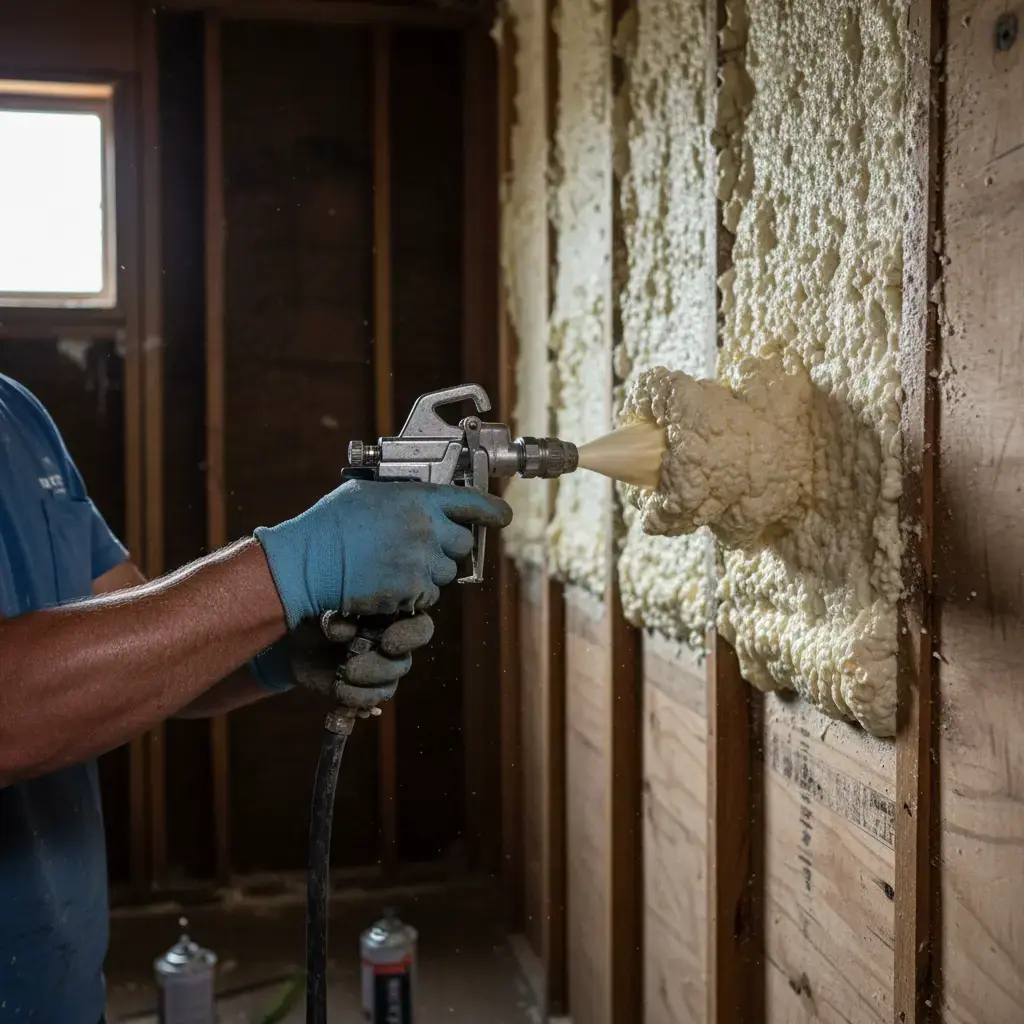
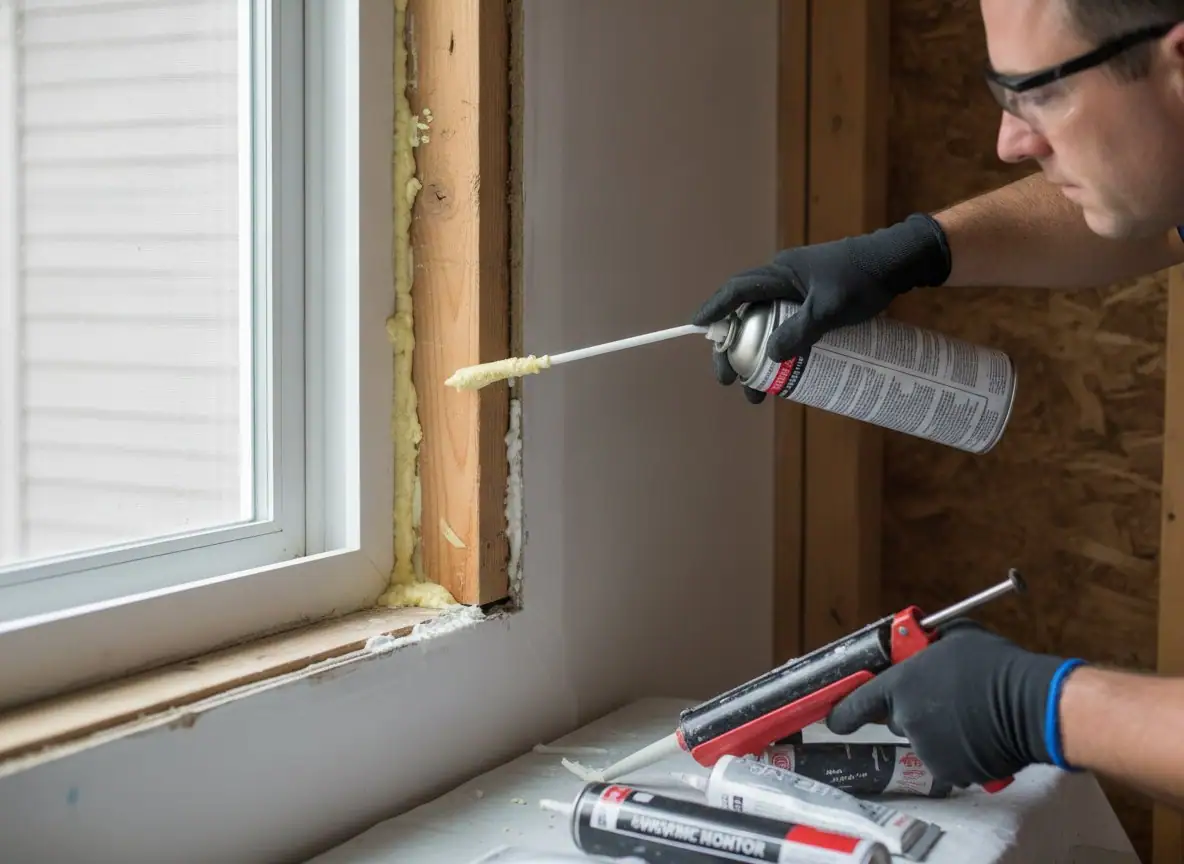
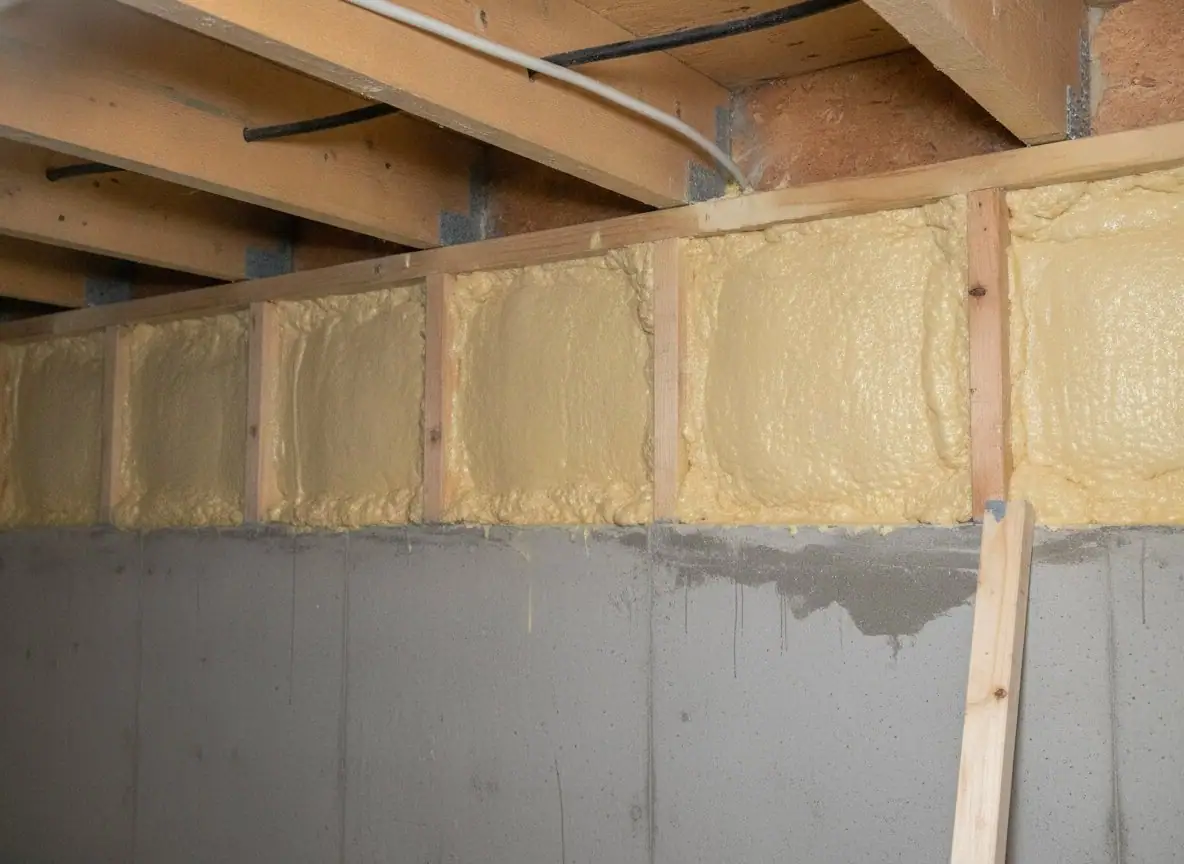
Spray polyurethane foam (SPF) comes in open-cell and closed-cell formulations. Closed-cell spray foam delivers R-6 to R-7 per inch, while open-cell ranges from R-3.5 to R-4 per inch. In Orange’s climate, closed-cell foam excels at blocking both heat transfer and moisture intrusion — a meaningful benefit in coastal-adjacent neighborhoods. It also provides an air seal, reducing the infiltration of hot, dusty summer air. Best applications include attic rooflines, rim joists, crawl spaces, and hard-to-reach wall cavities. The primary drawback is cost: expect to pay $1.50–$3.50 per square foot for open-cell and $2.50–$5.00 per square foot for closed-cell installed. For Orange homeowners dealing with extreme attic heat, the combination of insulation and air sealing makes spray foam a high-performance investment.
Blown-In (Loose-Fill) Insulation
Blown-in insulation — typically fiberglass or cellulose — is machine-installed and conforms to irregular spaces, making it ideal for topping off existing attic insulation in Orange’s older homes. Fiberglass loose-fill achieves R-2.2 to R-2.7 per inch; cellulose loose-fill reaches R-3.2 to R-3.8 per inch. Both materials work well in Orange attics, offering a cost-effective way to reach Title 24’s R-38 recommendation. Blown-in products fill gaps around joists and obstructions that batts can miss, reducing thermal bridging. Best applications include existing attic floors, enclosed wall cavities (dense-pack method), and hard-to-access spaces. Installed cost typically runs $1.00–$2.50 per square foot. Blown-in cellulose carries a slight edge in density and air resistance, which matters in Orange’s windy inland corridors.
Fiberglass Batt Insulation
Fiberglass batts are the most widely recognized insulation product — pre-cut panels of spun glass fiber installed between studs and joists. R-values range from R-11 (3.5-inch batt) to R-38 (10-inch batt), covering most Orange home applications. Batts are cost-effective, widely available, and easy to install in standard stud bays. However, in older Orange homes with irregular framing or settled walls, gaps and compression can significantly reduce real-world performance. They are not an air barrier on their own. Best applications include new construction walls, open attic floors, and floor assemblies over unconditioned spaces. Installed cost ranges from $0.50–$1.50 per square foot. For best results in Orange’s hot attics, batts should be paired with proper air sealing at penetrations and top plates.
Mineral Wool / Rockwool Insulation
Mineral wool (sold under brands like Rockwool and Thermafiber) is made from basalt rock or recycled slag and offers R-3.0 to R-3.3 per inch. What sets it apart in the Orange market is its inherent fire resistance — it withstands temperatures up to 1,400°F without melting, a meaningful consideration for homeowners near Orange County’s wildland-urban interface zones. Mineral wool also resists moisture and does not support mold growth, making it well-suited to coastal-adjacent areas. It is denser than fiberglass, providing better sound attenuation — a bonus in Orange’s busy suburban neighborhoods. Best applications include exterior walls, attic floors, and any fire-rated assembly. Installed cost runs $1.00–$2.50 per square foot. Its superior fire and moisture performance justifies the modest price premium over standard fiberglass.
Cellulose Insulation
Cellulose is made from roughly 80% recycled paper treated with borate fire retardants and achieves R-3.2 to R-3.8 per inch. It is one of the most environmentally sustainable options available and performs well in Orange’s climate. Its density gives it a slight advantage over fiberglass in slowing air movement, and its borate treatment provides meaningful pest resistance — relevant in Orange County where rodents and insects can infiltrate older attic spaces. Dense-pack cellulose is an excellent retrofit choice for filling closed wall cavities without tearing out drywall. Settled cellulose in attics can lose some R-value over time, so proper initial depth is important. Best applications include attic floors, dense-pack walls, and floor cavities. Installed cost is typically $0.80–$2.00 per square foot, making it one of the more affordable high-performance options.
Foam Board (Rigid) Insulation
Rigid foam boards — including EPS (expanded polystyrene, R-3.8/inch), XPS (extruded polystyrene, R-5/inch), and polyisocyanurate (polyiso, R-5.6–6.5/inch) — are rigid panels used where thin profiles and high R-value per inch are needed. In Orange, foam board is commonly installed on exterior walls during re-siding projects, under roofing materials on flat roofs, and in crawl space walls. It also functions as a continuous insulation layer that reduces thermal bridging through framing — a Title 24 compliance strategy. Foam board resists moisture effectively, making it appropriate for crawl spaces and below-grade applications common in hillside Orange homes. Installed cost ranges from $1.00–$3.00 per square foot depending on product and thickness. It is rarely used alone but excels as part of a layered insulation assembly.
Why Orange Homeowners Trust Home Comfort Insulation for Insulation
Home Comfort Insulation has earned the trust of Orange County homeowners by combining deep technical knowledge with honest, education-first service. Here is what sets our team apart:
Expertise Across All Insulation Types:
Expertise Across All Insulation Types:Our crews are trained and experienced with every major insulation material — from spray foam and blown-in to mineral wool and rigid board — ensuring you receive the right recommendation for your specific home and budget.
Licensed and Fully Insured:
Licensed and Fully Insured:We carry all required California contractor licenses and comprehensive liability coverage, protecting you and your property throughout every project.
Manufacturer-Certified Installers:
Manufacturer-Certified Installers:Our team holds certifications from leading insulation manufacturers, meaning installations meet or exceed product warranty requirements and performance specifications.
Free Insulation Assessment:
Free Insulation Assessment:We offer no-obligation whole-home insulation evaluations, identifying gaps, deficiencies, and priority areas so you can make informed decisions before spending a dollar.
Warranty Coverage:
Warranty Coverage:Our work is backed by both manufacturer material warranties and our own workmanship guarantee, giving you long-term peace of mind.
Local Energy Code and Rebate Knowledge:
Local Energy Code and Rebate Knowledge:We stay current on California Title 24 requirements, Southern California Edison rebate programs, SoCalGas incentives, and federal energy efficiency tax credits — helping you maximize savings on every project.
FAQ
Insulation Materials FAQ for Orange Homeowners
What is the best insulation type for Orange, CA’s climate?
There is no single best material — it depends on location and goals. For attics, blown-in cellulose or fiberglass to R-38 to R-60 is the most cost-effective approach. For maximum air sealing in attics or crawl spaces, closed-cell spray foam delivers the highest performance. For walls in retrofit situations, dense-pack cellulose or injection foam fill closed cavities effectively. For homeowners near wildfire-risk areas, mineral wool adds valuable fire resistance. A professional assessment helps match material to your specific home.
What R-value does Title 24 recommend for Orange, CA homes?
Orange falls in California Climate Zone 8. Under Title 24, new construction attics generally require R-38 as a minimum, though R-49 to R-60 is increasingly recommended for maximum comfort and energy savings. Walls typically require R-13 to R-21 depending on framing size. Floors over unconditioned spaces generally call for R-19. These are minimums — exceeding them is often cost-justified given Southern California Edison’s electricity rates and long cooling seasons.
How do insulation materials compare in cost for Orange homeowners?
Fiberglass batts are typically the least expensive at $0.50–$1.50 per square foot installed. Blown-in cellulose and fiberglass run $0.80–$2.50. Mineral wool batts range from $1.00–$2.50. Rigid foam board costs $1.00–$3.00. Open-cell spray foam runs $1.50–$3.50, and closed-cell spray foam is the most expensive at $2.50–$5.00 per square foot. Higher upfront costs for premium materials often translate to greater energy savings and longer service life, improving your overall return on investment.
Is attic insulation different from wall insulation in Orange homes?
Yes, significantly. Attic insulation addresses the largest source of heat gain in Orange homes — radiant heat from the roof deck — and typically uses blown-in or spray foam products applied to the attic floor or roofline. Wall insulation manages conducted heat through exterior surfaces and requires materials suited to cavity dimensions, typically 3.5 to 5.5 inches. Walls also require vapor and air barrier consideration. In Orange, attic upgrades almost always deliver faster payback than wall insulation due to the severity of summer heat gain through the roof.
How much energy can better insulation save in Orange?
Orange homeowners with inadequate attic insulation can reduce cooling and heating energy costs by 15–30% after a proper upgrade, according to the U.S. Department of Energy. Air sealing combined with insulation can push savings even higher. Given Southern California Edison’s tiered electricity rates, reducing air conditioning load has a compounding effect during peak summer billing periods. A well-insulated home also experiences fewer temperature fluctuations, reducing HVAC run-time and extending equipment life.
Are there rebates or tax credits available for insulation in Orange, CA?
Yes. Southern California Edison’s Energy Efficiency Programs offer rebates for qualifying insulation upgrades. SoCalGas also provides incentives for homes heated with natural gas. At the federal level, the Inflation Reduction Act’s Energy Efficient Home Improvement Credit (25C) provides a tax credit of up to 30% of insulation material costs, capped at $1,200 per year. Income-qualified Orange homeowners may also qualify for California’s CHEERS or LIHEAP programs. Eligibility and amounts change periodically, so we recommend confirming current offers during your assessment.
Can insulation help with noise reduction in Orange homes?
Absolutely. Dense materials like mineral wool, closed-cell spray foam, and dense-pack cellulose provide meaningful sound attenuation in addition to thermal performance. This is particularly valuable in Orange neighborhoods near the 57, 22, or 55 freeways, or near commercial corridors. Mineral wool is especially well-regarded for acoustic performance and is a popular choice for interior walls between rooms as well as exterior assemblies.
How long does insulation last in an Orange home?
Most insulation materials installed correctly last 20–80 years. Fiberglass and mineral wool can last the lifetime of the home if kept dry and undisturbed. Cellulose may settle 10–20% over time, which is accounted for during proper installation. Spray foam is essentially permanent when applied correctly. Insulation in Orange homes can degrade if exposed to roof leaks, pest activity, or improper installation — which is why a professional inspection every 10–15 years is a good practice, especially in older homes built before modern standards were established.
Get a Free Insulation Assessment in Orange
Not sure which insulation material is right for your home? Home Comfort Insulation offers free, no-obligation insulation assessments for homeowners throughout Orange, CA. Our certified team will evaluate your attic, walls, and crawl space, measure existing R-values, identify air leakage points, and recommend the most effective materials for your budget and Orange’s climate conditions.
We are locally based, fully licensed, and insured — and we will walk you through available rebates and tax credits that may significantly offset your project cost. Call us today at 714-909-2175 to schedule your free assessment. Comfort, savings, and peace of mind are just one call away.
Why choose us
Why choose Home Comfort Insulation?
Free estimates
Get a clear, no-obligation estimate before any work begins.
Licensed & insured
Your property and our crew are protected on every project.
Residential & commercial
One team for homes, multi-family and commercial properties.
Locally owned & operated
A local team serving your community and the surrounding area.
Get in touch
Find insulation help near you
Request a free estimate online or give us a call — our team will follow up quickly.
- Call us(714) 909-2175
- Visit1650 N Glassell St, Orange, CA 92867
- HoursMon-Sun 07:00-19:00